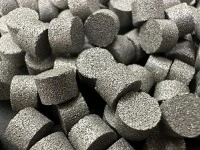

Powder metallurgy is a process technology for preparing metal or using metal powder (or a mixture of metal powder and non-metal powder) as raw material, after molding and sintering, to manufacture metal materials, composites and various types of products. Powder metallurgy has similarities with the production of ceramics, therefore, a series of new powder metallurgy techniques can also be used for the preparation of ceramic materials. Due to the advantages of powder metallurgy technology, it has become the key to solving the problem of new materials and plays a pivotal role in the development of new materials.
There are many factors affecting the performance of sintered body, mainly the properties of the powder body, molding conditions and sintering conditions. Factors of sintering conditions include heating rate, sintering temperature and time, cooling rate, sintering atmosphere, and sintering pressure conditions.
(1) Sintering temperature and time
The sintering temperature and time affect the porosity, density, strength and hardness of the sintered body. If the sintering temperature is too high and the time is too long, the performance of the product will be reduced, and even over-burning defects of the product will occur; if the sintering temperature is too low or the sintering time is too short, the performance of the product will be degraded due to under-burning.
(2) Sintering atmosphere
The sintering atmospheres commonly used in powder metallurgy include reducing atmosphere, vacuum, hydrogen atmosphere, etc. The sintering atmosphere also directly affects the properties of the sintered body. Sintering in a reducing atmosphere prevents burnout of the compact and reduces surface oxides. For example, iron-based and copper-based products often use producer gas or decomposed ammonia, and cemented carbide and stainless steel often use pure hydrogen. Vacuum sintering can be used for active metals or refractory metals (such as beryllium, titanium, zirconium, tantalum), hard alloys containing TiC and stainless steel. Vacuum sintering can avoid the adverse effects of harmful components (H2O, O2, H2) in the atmosphere, and can also reduce the sintering temperature (generally reduce100-150°C).
TopTiTech is one brand that has more than 11 years of experience in porous titanium materials, it has a QC team, a Sales team, and Research and Development team, and our company has passed the ISO 9001-2015 certification. We are a typical China supplier. We are professionally exporting under the standards of ASTM, GB, and AMS, as well as nonstandard porous titanium materials. Now we have gained close cooperation with clients from Korea, Iran, Europe, and America, and won good comments and suggestions from our users.
Our main products are Sintering Titanium Powder Filter, Titanium Sintered Filter Sheet, Titanium Fiber Felt, Titanium Foil, Titanium Anode, Titanium Aeration Head, Porous Sintered TitaniumFilter Tube, Stainless Steel Powder Sintered Filter Tube, Stainless Steel Sintered Wire Mesh, and
so on.
Our production also has been widely used in the Petrochemical industry, Aviation and Aerospaceindustry, Medical industry, Food industry, etc.
We appreciate your interest in our company very much and hope that our website will be helpful and informative to you. If you need more information, please contact our sales department.
Kindly please contact me, If you're interested in our products. you can check it: http://www.toptitech.com