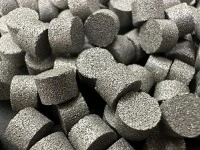

TOPTITECH Titanium fiber felt is a highly promising material for use as a liquid/gas diffusion layer (LGDL) in hydrogen production and fuel cell stack applications. Its exceptional thermal and electrical conductivities, combined with its excellent mechanical properties, make it an ideal candidate for these applications. One of the key advantages of titanium fiber felt is its high corrosion resistance, particularly at high positive overpotentials and in highly acidic and humid environments.

In contrast, carbon-based materials such as graphite bipolar plates, carbon paper, and carbon cloth are commonly used in LGDLs for proton exchange membrane fuel cells (PEMFCs). However, they are unsuitable for use in the anode of an LGDL due to the highly oxidative environment that occurs during electrolysis operation. This can lead to corrosion of the carbon-based materials and poor interfacial contacts, resulting in decreased cell efficiency. To address this issue, materials such as titanium felt with high corrosion resistance are required.
Material: Titanium
Size: ≤600*1000mm
Fiber size: 8 microns -20 microns
Thickness:0.25mm, 0.40mm
Porosity:60% – 80%
Porosity and Size can be customized.

The current density of different porous transport layers
By utilizing titanium fiber felt as an LGDL, the efficiency, and durability of PEM #electrolyzers and fuel cell stacks can be significantly improved. The high porosity and gas permeability of titanium fiber felt enable the efficient transfer of reactants and products between the electrodes and the electrolyte membrane, leading to stable and efficient #electrochemical reactions. Overall, the unique properties of titanium fiber felt make it a promising alternative to traditional carbon-based materials for use in LGDLs for hydrogen production and fuel cell stack applications.