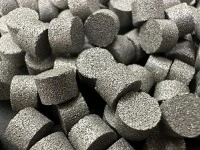

Porous titanium plates from TOPTITECH are a highly effective and ultra-thin transfer layer that can be utilized as an anode diffusion media in standard PEM electrolyzers. These metallic or titanium-based electrodes are specifically designed for use in flow fields and diffusion materials, especially on the oxygen (anode) side, where superior mass transport and a smaller footprint are critical.

Due to their exceptional performance and efficiency, porous titanium plates from TOPTITECH are rapidly gaining popularity among users of standard PEM electrolyzers.
Why no carbon-baed gas diffusion layers?
There are a few reasons why carbon-based gas diffusion layers (GDLs) are not typically used at the anode of electrolyzers:
Corrosion: Carbon materials can be prone to corrosion in acidic or alkaline environments, which are commonly used in electrolyzers. This can lead to degradation of the GDL over time, reducing its effectiveness and potentially causing damage to the electrolyzer hardware.
Gas crossover: Carbon-based GDLs can be more permeable to hydrogen gas than other materials, which can lead to gas crossover between the anode and cathode compartments. This can reduce the efficiency of the electrolyzer and potentially cause safety issues.
Contamination: Carbon materials can also be prone to contamination, particularly by organic compounds. This can lead to reduced performance and lifespan of the GDL, as well as potential damage to other components of the electrolyzer.

Heat management: Electrolyzers can generate significant heat during operation, and carbon-based GDLs may not be as effective at dissipating heat as other materials. This can lead to temperature imbalances within the electrolyzer, which can reduce efficiency and potentially cause damage.
Overall, while carbon-based GDLs may be suitable for some applications, they are not typically used at the anode of electrolyzers due to the potential for corrosion, gas crossover, contamination, and heat management issues. Other materials, such as metal or polymer-based GDLs, are often preferred for these applications.