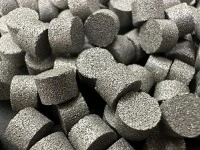

The Porous Transport Layer (PTL) is an essential component of a PEM electrolyzer, typically situated between the Gas Diffusion Layer (GDL) and the electrode.
It plays a crucial role in facilitating the efficient mass transport of reactant and product gases, managing water within the electrolyzer, maintaining optimal pressure and gas distribution, and providing mechanical support to the electrode assembly.
When selecting a PTL, key factors to consider include its porosity, thickness, conductivity, mechanical properties, and chemical stability.


The Gas Diffusion Layer (GDL) and Porous Transport Layer (PTL) are both porous materials used in fuel cells and electrolyzers, but they have different functions and structures.
A GDL is a thin, porous layer positioned between the electrode and reactant gas flow field in fuel cells or electrolyzers. Its main purpose is to transport reactant gases to the electrode surface and remove excess water produced during the electrochemical reaction. The GDL also provides electrical conductivity between the electrode and the current collector, which collects the electrical current generated by the reaction.
In contrast, the PTL is a porous layer used to evenly distribute reactant gases across the electrode surface in fuel cells or electrolyzers. The PTL can also act as a barrier to prevent flooding of the electrode by excess reactant gas and manage water transport away from the electrode.
Although PTLs and GDLs are both made of porous carbon-based materials such as carbon paper, Porous titanium, or titanium fiber, the specific material and structure of the PTL and GDL can significantly impact the performance of fuel cells and electrolyzers. The choice of materials may depend on the device's specific requirements, such as high-temperature fuel cells that use Ti-based materials for PTL and GDL to withstand high temperatures.
In summary, the structure and function of PTLs and GDLs differ, but both materials are essential for efficient and effective fuel cell and electrolyzer operation. The materials used for PTLs and GDLs may vary depending on the device's requirements, and Ti-based materials are commonly used due to their high conductivity and compatibility with catalyst materials.