
The membrane electrode (membrane electrode assembly, MEA) is the core component of the proton exchange membrane fuel cell. It is made of three parts: proton exchange membrane(PEM ), catalyst layer(CL)and gas diffusion layer(GDL).

The structure of the MEA
What is the function of the gas diffusion layer in MEA?
Air guide and drainage function
In the PEMFC membrane electrode, the gas diffusion layer mainly plays the role of transporting gas and moisture, and is responsible for guiding the hydrogen and oxygen in the bipolar plate to the catalytic layer, providing enough gas for the catalytic layer to react; at the same time. The water generated in the process is transferred to the bipolar plate to prevent the product from accumulating in the catalytic layer and hindering the further progress of the reaction. Therefore, the diffusion layer must be a porous material with good air permeability and good drainage characteristics.
Conductive and support function
The diffusion layer needs to have good electronic conductivity, so that the electrons generated from the catalytic layer can pass through the diffusion layer smoothly and move to the bipolar plate. In addition to these main functions, the diffusion layer also provides a certain support strength for the membrane electrode, and the diffusion layer is the thickest part of the membrane electrode, usually greater than 100 μm.
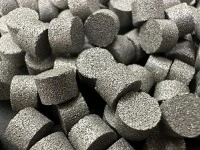
The gas diffusion layer is mainly made of metal sintered felt (titanium felt or nickel felt) as the raw material, with a porosity of 60% to 80%. After hydrophobic treatment, hydrophilic channels and hydrophobic channels are formed. The hydrophilic channels can convert the catalyst layer The water in the bipolar plate is guided into the bipolar plate, while the hydrophobic channels provide transport paths for gas diffusion.

sintered nickel felt

sintered titanium felt