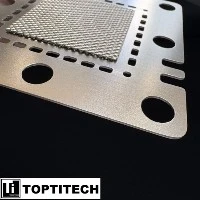


Titanium metal fiber has emerged as an exciting field in materials science, garnering increasing attention from researchers in aerospace, petrochemical, national security, and healthcare sectors. This fibrous material, created from metal wire with a specific length-to-diameter ratio, inherits the inherent qualities of the metal substance, offering a wide range of applications.
Titanium fiber boasts numerous advantages, including high temperature and low temperature resistance, corrosion resistance, lightweight properties, and excellent impact energy absorption. These characteristics make titanium fiber and titanium fiber porous materials suitable for use in diverse applications, even in challenging environments.

1. Sound-absorbing material
Metal fiber, with its loose and porous structure, serves as an effective sound-absorbing material. When sound waves enter the material, the friction between air molecules and the interior holes within the fiber generates viscous resistance. Additionally, the sound energy is converted into heat energy through heat conduction, facilitating sound absorption. Metal fiber, with its high strength, good thermal conductivity, corrosion resistance, and high temperature resistance, is particularly useful in high-pressure aeroengines as acoustic lining material and for underwater low-frequency sound absorption.
2. Reinforcement materialTo meet the increasing performance requirements driven by advancements in science and technology, composite materials have gained significant research interest. Titanium fiber, with its high specific modulus, specific strength, high temperature strength, oxidation resistance, and creep resistance, proves valuable as a reinforcement material. By introducing titanium fiber into titanium-aluminum alloy, crack propagation and expansion in the alloy matrix can be prevented, improving the specific strength and modulus while effectively absorbing deformation and toughening the base alloy.


In conclusion, titanium fiber materials offer a broad range of applications due to the inherent advantages of titanium metal and the unique characteristics of fiber materials. They can thrive in special and demanding conditions, showcasing significant research and development potential, as well as substantial value in the future.