
Titanium alloys are widely used in aerospace, electronics, and other high-performance industries due to their exceptional strength-to-weight ratio and corrosion resistance. However, the inherent formation of a dense passive oxide layer on titanium surfaces poses significant challenges to achieving stable electroplating adhesion. This article explores advanced techniques and process optimizations to improve the bonding strength between titanium substrates and electroplated coatings, offering practical insights for engineering applications.
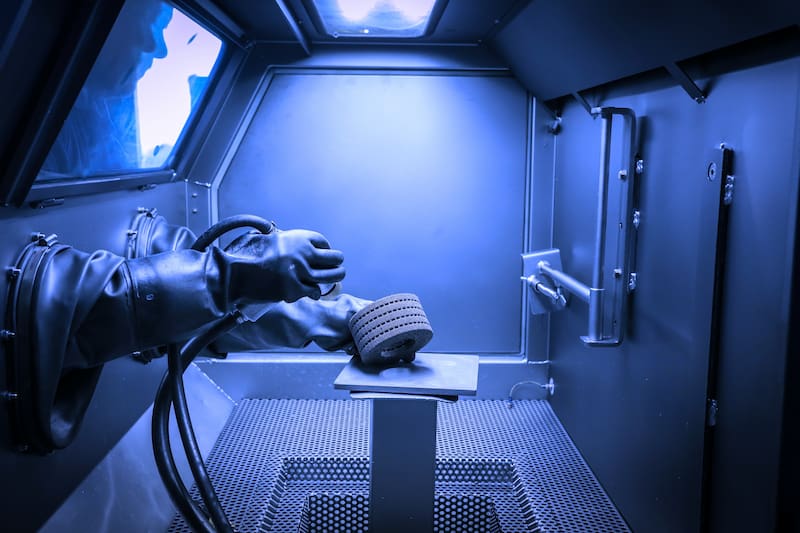
Surface pretreatment is critical for enhancing adhesion. Mechanical sandblasting with 60-120 mesh abrasive particles effectively removes the passive oxide layer while increasing surface roughness, which can improve bonding strength by up to 3.2 times. However, for high-strength titanium alloys with hardness exceeding HRC 40, sandblasting pressure must be carefully controlled below 0.4 MPa to prevent stress concentration. Chemical surface modification techniques, such as hydrogenation and fluorination, are also highly effective. Hydrogenation using HCl-TiCl3 solutions forms a TiH₂ transition layer, creating a Ti-TiH₂ eutectic structure that enhances interfacial bonding energy to 28 MPa. Fluorination with NaCr₂O₇-HF solutions generates a TiF₃/TiO₂ composite layer with a honeycomb structure, significantly improving mechanical interlocking with the coating.
The deposition of metallic transition layers further strengthens adhesion. A two-step zinc immersion process, involving initial zinc deposition followed by stripping and re-immersion, achieves a dense zinc layer with over 98% coverage, increasing copper coating adhesion from 3.5 N/mm² to 15.6 N/mm². Electroless nickel plating, using NaH₂PO₂-NiSO₄ solutions, deposits a 2 μm Ni-P layer that forms Ni-Ti intermetallic compounds, achieving a shear strength of 45 MPa. These transition layers act as effective intermediaries, bridging the titanium substrate and the final coating.
Post-plating treatments play a vital role in optimizing adhesion. Vacuum heat treatment at 300°C for 2 hours under 10^-3 Pa promotes interfacial diffusion, increasing bonding strength by 40%. Pulse current annealing, utilizing 20 kHz high-frequency pulses at 200°C for 30 minutes, facilitates directional atomic diffusion, elevating adhesion to the highest ASTM D3359 grade. These thermal processes enhance atomic-level bonding without compromising the substrate's structural integrity.
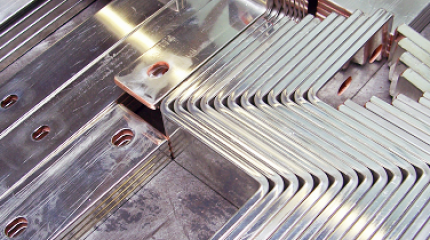
For specific applications, tailored process strategies are recommended. Precision electronic components benefit from electroless nickel plating combined with pulse annealing, minimizing dimensional deformation to less than 0.1%. Structural components can utilize sandblasting, hydrogenation, and high-temperature diffusion, reducing costs by 30%. Components exposed to harsh environments should employ fluorination and flash nickel plating, improving corrosion resistance by a factor of five.
Emerging technologies, such as atomic layer deposition (ALD) for nanoscale transition layers and laser-assisted electroplating, are poised to revolutionize titanium alloy electroplating. These advancements aim to push adhesion strength beyond 200 MPa, opening new possibilities for high-performance applications. By integrating these techniques and optimizing process parameters, engineers can achieve superior adhesion performance tailored to specific operational requirements, ensuring the reliability and durability of titanium alloy components in demanding environments.