

The fundamental reason titanium dominates chlor-alkali equipment lies in its passivation behavior. When exposed to oxidizing environments-particularly moist chlorine gas-titanium rapidly forms a stable, protective oxide film on its surface. This passive layer shields the underlying metal from aggressive chemical attack in conditions that would rapidly degrade stainless steels, copper alloys, and even many nickel-based materials. In high-temperature wet chlorine environments, titanium exhibits corrosion rates on the order of mere microns per year. This combination of thermodynamic instability in the bulk (standard electrode potential of Ti²⁺/Ti at -1.63V) and kinetic stability through surface passivation gives titanium its unique position in chlor-alkali metallurgy.
Electrolytic Cells
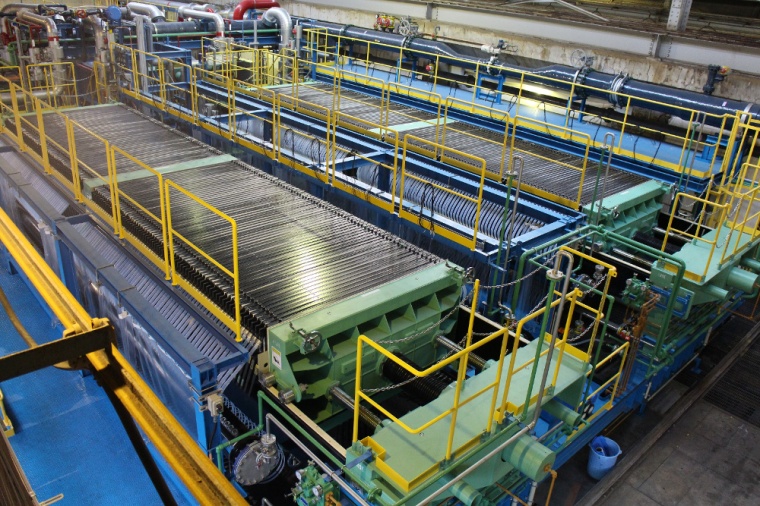
The most significant application of titanium in chlor-alkali production is in electrolytic cells. Metal anode electrolytic cells and ion-exchange membrane electrolyzers employ titanium as the substrate for dimensionally stable anodes (DSA)-titanium base structures coated with noble metal oxides such as ruthenium, iridium, or their combinations.

The transition from graphite anodes to titanium-based DSA anodes marked a technological revolution in the industry. Titanium anodes offer stable dimensions throughout their service life, enabling precise electrode gap control and consistent current distribution. This dimensional stability translates directly into lower cell voltage and reduced power consumption. The DSA technology, pioneered in the 1950s and commercialized in the late 1960s, was rapidly adopted across the United States, Italy, Japan, and Germany.
In ion-exchange membrane electrolyzers, titanium is used extensively not only for anodes but also for anolyte circulation systems, brine handling systems, and various heat exchangers. The anodic compartments of these cells are constructed from titanium to withstand the highly oxidizing anolyte environment.
Wet Chlorine Cooling
The electrolysis of brine generates large volumes of hot, humid chlorine gas that must be cooled and dried before further processing. This environment is among the most corrosive encountered in industrial chemistry. Early attempts using graphite, glass, ceramic, and plastic coolers all encountered fundamental limitations-corrosion, cracking, aging, and poor heat transfer.
Titanium coolers changed this landscape entirely. Testing has demonstrated that titanium in hot, humid chlorine gas corrodes at only 0.0025mm per year. Russia pioneered the use of titanium chlorine gas coolers in 1963, and the United States' Allied Chemical Company soon followed, replacing graphite units with titanium. China manufactured its first titanium cooler in 1965, and by 1973, titanium tubular coolers were operating across multiple provinces.

The benefits extend beyond corrosion resistance. Titanium coolers shorten the cooling and drying process, reduce chlorine gas loss, minimize environmental pollution, and improve the stability of compressed gas. Some titanium wet chlorine coolers installed in chlor-alkali plants have remained in service for nearly two decades with no signs of degradation.
Brine Preheating and Dechlorination Systems
Refined brine preheaters represent another critical application. These heat exchangers must maintain stable operation at elevated temperatures in chloride-rich media. Titanium tube bundles provide the necessary corrosion resistance while delivering reliable heat transfer performance.
In dechlorination systems, titanium is the material of choice for dechlorination towers and the pumps and valves used in vacuum dechlorination. These components must resist attack from residual free chlorine remaining in the process stream. Titanium equipment effectively extends maintenance intervals and ensures the quality of recycled brine.
Pumps, Valves, and Conveying Systems
Titanium pumps and valves play an essential role in medium transport throughout the chlor-alkali plant. In membrane electrolysis and mercury electrolysis processes, titanium pumps offer the most economical solution for handling potassium hypochlorite and sodium hypochlorite streams. A notable case involved a U.S. company using a titanium pump to handle an 85°C salt solution containing NaCl crystals and free chlorine-the pump demonstrated a service life exceeding ten years. In chlorine gas conveying systems, titanium piping addresses the strength and sealing limitations previously encountered with non-metallic materials.
The chlor-alkali industry has undergone three major equipment transformations in caustic soda production: from horizontal tank cells to vertical diaphragm electrolyzers in the 1960s, from graphite to metal anodes in the 1970s, and to ion-exchange membrane technology in the 1980s. Titanium has been central to the latter two revolutions.
Today, titanium equipment-including anodes, electrolyzers, coolers, preheaters, dechlorination towers, pumps, valves, and piping-forms the backbone of modern chlor-alkali production. The material's corrosion resistance, dimensional stability, and long service life have enabled higher current densities, lower energy consumption, extended equipment campaigns, and reduced environmental impact. The chlor-alkali industry remains one of the largest consumers of titanium in the chemical sector, and titanium continues to inject new momentum into industrial development.