
Etched fuel cell bipolar plates are vital components in fuel cell systems. Their design and performance directly impact the efficiency and reliability of fuel cells. In this article, we will explore the role, principles, material selection, and future development directions of etched fuel cell bipolar plates.
As the demand for clean energy continues to grow, fuel cells have gained significant attention as an efficient and environmentally friendly energy conversion technology. Etched fuel cell bipolar plates, as one of the core components of fuel cells, play a crucial role in catalyzing the reaction of hydrogen and oxygen into electrical energy. Let's delve into the key roles and technical details of etched fuel cell bipolar plates.
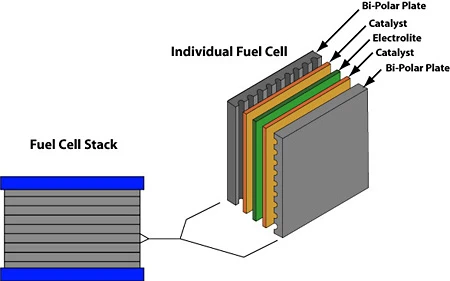
Role and Principles:
Etched fuel cell bipolar plates are located within the fuel cell stack and serve to catalyze the conversion of hydrogen and oxygen into electricity. They carry the catalyst required for electrochemical reactions and facilitate the transfer of electrons from the anode to the cathode through conductive channels. Additionally, they must maintain structural stability and durability in high-temperature and corrosive environments.
Material Selection:
When selecting materials for etched fuel cell bipolar plates, several key factors need to be considered, including conductivity, corrosion resistance, thermal stability, and production costs. Commonly used materials include metals (such as stainless steel, nickel alloys), titanium materials, and carbon materials (such as carbon fiber-reinforced polymer composites). Different materials offer distinct advantages and limitations, and engineers must weigh these considerations to meet the requirements of the fuel cell system.

Titanium Etched Bipolar Plates
As technology continues to advance, Etched fuel cell bipolar plates are also evolving and improving. Some research focuses on enhancing catalyst activity and stability, reducing plate thickness to improve quality and thermal conductivity, and exploring new materials and manufacturing processes. Furthermore, advancements in manufacturing technology contribute to cost reduction, facilitating the commercial application of Etched fuel cell bipolar plates.
Etched fuel cell bipolar plates play a critical role as key components in fuel cell systems. By optimizing design and material selection, it is possible to enhance fuel cell efficiency and reliability, driving the development of clean energy technologies. Looking ahead, with ongoing technological innovation and progress, we have every reason to believe that Etched fuel cell bipolar plates will play an increasingly important role in achieving sustainable energy transformation.