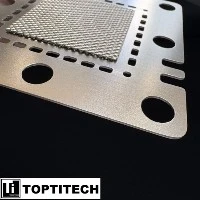

Bubble point test is the universal industry method to verify the maximum pore size of sintered stainless steel filter discs. The bubble point value directly reflects filtration accuracy, venting performance and sealing reliability for sensor protection, gas sampling and liquid filtration applications. Bubble point is not only related to pore size, but also affected by raw material, manufacturing process and test conditions.
1. Maximum Pore Size of the Sintered Filter Disc
The primary deciding factor. Bubble point follows the Young-Laplace equation: the larger the maximum through-pore, the lower the bubble point pressure. Sintered discs with finer powder grade form smaller pores and deliver higher bubble point. It is important to distinguish maximum pore size (bubble point pore) vs average pore size; average pore cannot represent bubble point performance.
2. Raw Stainless Steel Powder Particle Size & Powder Distribution
Powder grade controls the pore structure. Narrow particle size distribution creates uniform pores and stable, repeatable bubble point results. Wide powder distribution creates a small number of large through-pores, which reduces bubble point even if the average pore rating remains unchanged. 316L powder is the most common raw material for corrosive service.
3. Sintering Temperature, Holding Time and Compacting Pressure
Compacting pressure defines the green density before sintering. Higher compact pressure increases material density and reduces pore opening. Sintering temperature and soak time control powder necking: insufficient sintering forms weak pores and unstable bubble point; over-sintering shrinks pores and raises bubble point pressure. Minor changes in sintering parameters can cause obvious bubble point deviation across batches.
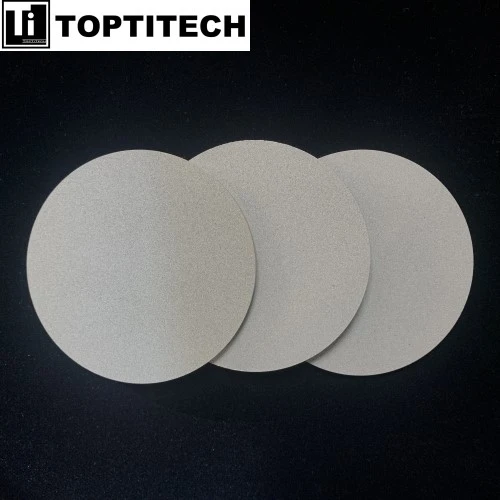
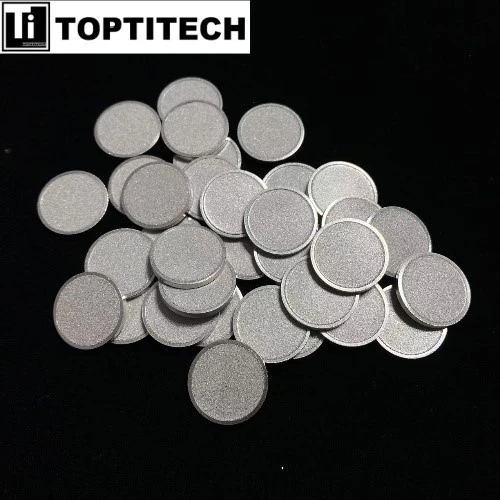
4. Filter Disc Thickness & Pore Path Tortuosity
Thicker sintered discs have longer, twisted pore channels. Even with identical surface pore size, increased tortuosity will slightly raise measured bubble point. Thin filter discs for sensor vents feature short pore paths, so their bubble point is more sensitive to surface pore defects.
5. Surface Condition & Surface Skin Layer
Surface machining, polishing or skin formation during sintering will alter surface pore openings. Grinding or laser cutting on filter disc edges may open up large edge pores and drop bubble point. Uncontrolled surface scratches or micro-cracks create preferential gas leakage paths and produce false low bubble point readings.
6. Test Medium, Temperature and Test Operation (External factors)
Bubble point reading is medium-dependent. Standard test fluid is isopropyl alcohol (IPA) or distilled water. Liquid surface tension changes with temperature; rising temperature reduces surface tension and lowers bubble point pressure. Slow pressurization rate is required. Fast pressure ramp will generate incorrect high readings.
7. Flatness, Edge Integrity and Mechanical Damage
Dents, microcracks, chipped edges from machining or installation create bypass leakage. These defects drastically reduce bubble point, even though the bulk sintered material still meets the specified pore grade. This is a frequent root cause for failed incoming QC inspection.
Conclusion
The bubble point value of sintered stainless steel filter discs is a comprehensive technical indicator, not merely determined by nominal micron rating. It is fundamentally governed by the maximum through-pore size formed by stainless steel powder grading and sintering craftsmanship, while further tuned by pore tortuosity, material thickness, and surface integrity. Process variations in compaction temperature, sintering duration, and post-processing quality directly lead to batch deviations in bubble point performance. Additionally, external testing conditions including fluid medium, temperature, and pressurization method significantly affect final test results.