
In the realm of titanium alloy machining, mitigating the impact of vibrations on precision stands as a pivotal challenge. To efficaciously diminish these perturbations, an amalgamation of measures can be implemented.

Elevating machine rigidity through high-strength materials, augmented reinforcements, or vibration isolation designs aids in curbing the transmission and amplification of vibrations. Optimal tool selection, leveraging ultra-hard materials like diamond or carbide tools, along with precision tool holding systems, reduces cutting forces and vibrations.
Fine-tuning cutting parameters encompassing speed, feed rate, and depth coupled with advanced machining strategies like multi-pass cutting yield smoother surfaces. Strategic coolant selection and application such as high-pressure or spray cooling diminish heat accumulation, thereby reducing vibrations.
Incorporating vibration damping support structures like rubber pads, air dampers, or hydraulic dampers absorbs machining-induced vibrations, preventing their propagation to other machine components. Dynamic balancing adjustments for critical components such as spindles and transmission systems minimize rotational imbalances and associated vibrations.
Embracing high-precision servo control systems for real-time monitoring and adjustment of speed and position during machining minimizes mechanical vibrations arising from abrupt acceleration or deceleration. Path optimization to mitigate sudden directional changes or excessive cutting loads reduces vibrations triggered by suboptimal trajectories.
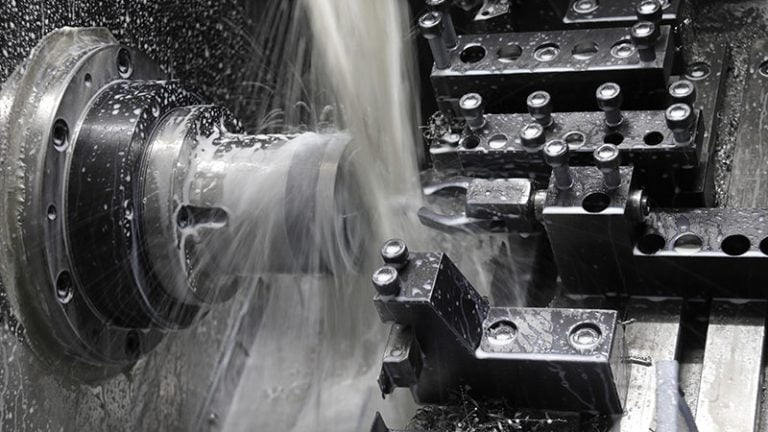
Ensuring a constant temperature environment and employing temperature compensation technologies for real-time monitoring and adjustment of machining parameters counteracts the influence of ambient temperature fluctuations on machining precision. Incorporating both passive and active vibration control techniques, leveraging inherent mechanical properties as well as sensor-actuator systems for real-time monitoring and adjustment, further fortifies vibration mitigation strategies in titanium alloy machining.