

In the petrochemical and pharmaceutical industries, reactors often operate under extreme conditions of hundreds of degrees Celsius and dozens of megapascals. When the media involves flammable and explosive gases, equipment safety and reliability directly impact business continuity. Metal sintered porous elements, serving as critical gas distribution and safety relief devices, are the "invisible guardians" in these extreme operating conditions.
Working Principles: Precise Control of Micro Pores
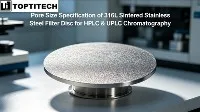
Metal sintered porous elements are manufactured using high-temperature sintering technology in powder metallurgy: metal powders (such as 316L stainless steel or Hastelloy) are cold isostatically pressed, then metallurgically bonded at high temperatures to create a rigid monolithic structure with three-dimensional interconnected pore channels.
►Core Parameters and Performance Data
Pore Size Distribution Control
Standard control range: 1–100 μm (customizable based on process requirements)
Distribution deviation: ≤ ±10% (ensuring consistency in filtration accuracy and permeability)
Porosity: 30–40% (maximizing permeability while maintaining structural strength)
Gas Distribution Principle

As gas passes through uniform micron-sized pores, it is divided into countless micro-bubbles, achieving efficient dispersion of reaction media. With a 10 μm pore element:
Bubble diameter: ≈ 50–200 μm (conventional distributors typically produce bubbles > 2 mm)
Gas-liquid contact area: 10–20 times increase
Mass transfer coefficient: 30–50% improvement
Flame Arresting Principle
When a flame front passes through micro channels, the channel walls rapidly absorb heat, lowering the flame temperature below the ignition point and achieving flame quenching.
Maximum Experimental Safe Gap (MESG): Depending on gas group classification, sintered metal flame arrestor gaps are typically designed at 0.5–1.5 mm
Flame arrest velocity: Capable of stopping subsonic to supersonic flame propagation
Explosion pressure resistance: Withstands explosive impacts ≥15 bar without failure
Relief Principle
The pre-designed pore structure creates controlled relief paths during overpressure conditions, preventing dangerous pressure accumulation.
Initial opening pressure deviation: ≤ ±5%
Full opening relief time: < 50 ms
Why Choose Metal Sintered Elements?
1. Structural Integrity Eliminates Failure Sources

Traditional welded or machined components have stress concentration points that are prone to fatigue crack initiation under high-temperature high-pressure cyclic loads. In contrast, metal sintered bodies feature a fully metallic rigid monolithic structure with no interfaces, fundamentally eliminating weak points.
Tensile strength: ≥ 500 MPa (316L material)
Fatigue life: > 10⁷ cycles under alternating loads
2. Essential Temperature and Pressure Resistance
316L sintered elements provide long-term stable operation:
Operating temperature range: -196°C to 600°C (special alloys up to 900°C)
Operating pressure: ≤ 20 MPa (higher pressures customizable)
Thermal shock resistance: Withstands rapid temperature changes of ΔT = 300°C without cracking
3. Cleanable and Regenerable for Extended Life
When pore blockage increases pressure drop, performance can be restored through back-pulse cleaning, ultrasonic cleaning, or other regeneration methods.
Initial pressure drop: < 0.02 MPa at design flow rate
Pressure drop recovery after regeneration: ≥ 95%
Design life: 5–10 years (depending on operating conditions)
Typical Application Scenarios

1. Petrochemical Industry: Gas Distribution in Hydrogenation Reactors
In hydrocracking and hydrotreating processes (typical conditions: 350–450°C, 12–18 MPa), hydrogen must be uniformly distributed across catalyst beds. Metal sintered spargers disperse high-pressure hydrogen into micron-sized bubbles, significantly improving gas-liquid contact efficiency while ensuring long-term reliability under extreme conditions.
2. Pharmaceutical Industry: Safety Relief in High-Pressure Reactors
In high-pressure reactions for API synthesis (typical conditions: 100–200°C, 2–8 MPa) involving flammable solvents, metal sintered flame arrestor relief devices serve dual functions: overpressure relief paths and flame arrestment, providing intrinsically safe design compliant with GMP requirements.

3. Fine Chemicals: Gas Analyzer Protection
In online gas analysis systems, sintered metal filters protect precision sensors from particulate contamination while withstanding corrosive sample gases (e.g., containing Cl₂, SO₂) and high-temperature sample gases (≤ 500°C).
4. Hydrogen Energy: Hydrogen Storage Material Testing
In high-pressure hydrogen storage research systems (typical conditions: -196°C to 80°C, 35–70 MPa), metal sintered elements function as gas distributors and dust filters, ensuring test data accuracy and equipment safety.