
physical regeneration process
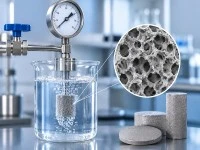
This process is suitable for filtering media with minimal particulate impurities and a relatively light blockage level in titanium filter cores. Examples include ozone disinfection filtration and air filtration.
1. Backwashing: Use pure water (deionized water) for backwashing in the reverse direction for 15 minutes, with a backwash pressure of less than 0.4 MPa, or use clean air (steam) for backwashing, with a backwash pressure of less than 0.4 MPa.
2. Ultrasonic Cleaning: Place the titanium rod in an ultrasonic cleaning tank, clean for 60 minutes, then remove and rinse with deionized water or distilled water for 15 minutes. After drying and sterilization, it is ready for use.
chemcial treatment process

Chemical Treatment Process:
This process is suitable for severe blockage in titanium filter cores and filtering media with complex compositions (such as decarbonization filtration, filtration with protein-based media, or highly viscous media).
Alkaline Wash Process: For newly used or periods of prolonged shutdown, immerse the titanium filter cores in a 1% NaOH analytical alcohol solution for 30 minutes. Before immersion, moisten with ordinary water and then immerse in the alkaline solution. After immersion, rinse both inside and outside with deionized water at least twice, with each rinse lasting no less than 30 minutes and a water pressure of 0.2-0.3 MPa. Once rinsed, place the filter cores in static water until no floating particles are observed (lamp inspection), and test for a neutral pH.
acid wash process
1. Preparation of Cleaning Solution:
Potassium (or Sodium) dichromate 5% (anhydrous)
Drinking water 1000g
Concentrated sulfuric acid (industrial-grade) added to make 2000ml
2. Preparation Method:
Take potassium (or sodium) dichromate crystals or fine powder, dissolve in hot water at 60-80 degrees Celsius, and slowly add concentrated sulfuric acid (94%-96%) until the required volume is reached. It is advisable to add the acid slowly at the beginning, stirring continuously while adding. After reaching 1200ml, the potassium (or sodium) dichromate should be completely dissolved. Initially, the color changes from brown-red to a darker red; at this point, the addition speed can be slightly increased until completion. If some undissolved material remains after adding all the acid, reheat to dissolve it, then allow it to cool, and store it in a sealed container for later use.
cleaning steps
Remove the filter elements.
Rinse the inner and outer walls with injection-grade water or filtered distilled water for approximately 3 minutes at a temperature of around 60°C.
Use compressed air (note: ensure no oil mist is mixed in the air) to blow-dry and clean any water droplets.
Place the elements into the cleaning solution (at a concentration of 2.5%-3%) and soak for around 15 minutes, then remove.
Rinse the inner and outer sides approximately three times with deionized water or distilled water at a pressure of 0.3-0.35 MPa, at a temperature below 80°C, or at room temperature.
Use hot steam to blow-dry any remaining water from the elements directly into a steam sterilizer for sterilization for at least 40 minutes.
Rinse with a small amount of injection-grade water and maintain a constant temperature of 112°C or higher for at least 1 hour.
Place in a sealed sterilization container for protection.