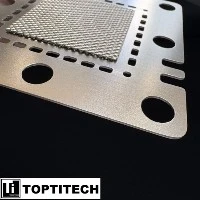

When customizing and designing metal powder sintered porous filter elements, several crucial considerations must be addressed. Today, TOPTITECH provides a detailed introduction to these considerations:
Filter Media Selection
Choosing the appropriate metal powder material and pore size distribution is essential based on the media to be filtered, whether liquid or gas, and its specific characteristics, such as particle size, concentration, and viscosity.
Pore Structure
The filtration requirements will dictate the suitable pore size distribution, porosity, and pore connectivity. This ensures the necessary filtration efficiency and flux are achieved.

SEM morphology of porous substrate prepared by 316 L stainless steel powder of different particle sizes at sintering temperature of 1170 °C: (a) 60 mesh; (b) 100 mesh; (c) 400 mesh; (d) 200 mesh
Material Selection
Selecting a metal powder material suitable for specific applications involves considering properties like corrosion resistance, high-temperature resistance, mechanical strength, and chemical inertness.
Size and Shape
Determine the size, shape, and connection method of the filter element based on the filtration system's design requirements and space constraints.
Support Structure
Designing the support structure ensures the mechanical strength and stability of the filter element, preventing deformation or breakage during operation.
Cleaning and Regeneration
Consideration of cleaning and regeneration methods is vital to extend the filter element's lifespan and maintain consistent filtration performance.
System Compatibility
Ensure the filter element is compatible with other components of the filtration system, such as seals and housings, to guarantee effective sealing and connections.
Fluid Dynamics
Address fluid dynamics during the design process to avoid issues like excessive pressure drops or uneven fluid distribution.
Filtration Efficiency Testing
Design appropriate methods and equipment to test the filtration efficiency of customized filter elements, ensuring they meet the expected filtration requirements.
Cost-Effectiveness
Balance performance, lifespan, and cost to ensure the customized filter element meets application needs in an economically sustainable manner.
These factors will vary depending on specific applications and needs. Therefore, detailed discussions and evaluations with the supplier or a professional engineer are critical during the customization and design process.