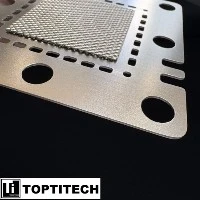

Laser cutting uses a concentrated laser beam for precise material cutting. The laser beam is typically generated by a laser resonator, focused by a series of mirrors or lenses, and directed onto the material surface, melting, burning, or vaporizing it to create the desired shape or pattern.
How does Laser Cutting work and what are the advantages of Laser Cutting?

1. Laser Generation
The laser beam is generated within a laser resonator, commonly produced by a CO2 laser, fiber laser, or neodymium (Nd) laser, selected based on the material properties.

2. Beam Focusing
The laser beam is then directed through a series of mirrors and lenses to focus it into a concentrated beam of light. The focusing optics ensure that the laser beam is concentrated to a small spot size for precision cutting.


5. Computer Control
The entire process is computer-controlled using specialized software that guides the movement of the laser beam along the cutting path. Software manages variables like laser intensity, cutting velocity, and focal distance to attain the intended cutting outcome.

6. Cutting Parameters
Various cutting parameters such as power density, beam focus, cutting speed, and assist gas pressure are adjusted based on the material being cut. Optimal cutting outcomes vary depending on the material, necessitating specific laser configurations.