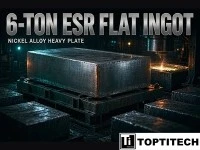

A specialty-metallurgy plant in northwest China has successfully trial-produced a 6-ton electroslag remelted (ESR) flat ingot of high-end nickel-based superalloy, breaking a long-standing foreign monopoly on large-section ingot technology and closing a critical gap in the domestic supply chain for nickel alloy heavy plate.
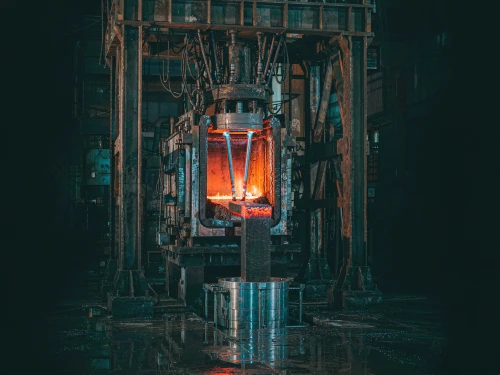
The ESR furnace at the moment of ingot withdrawal
Why Flat Beats Round in Superalloy Melting
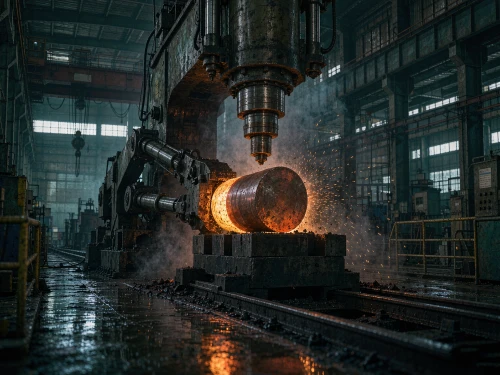
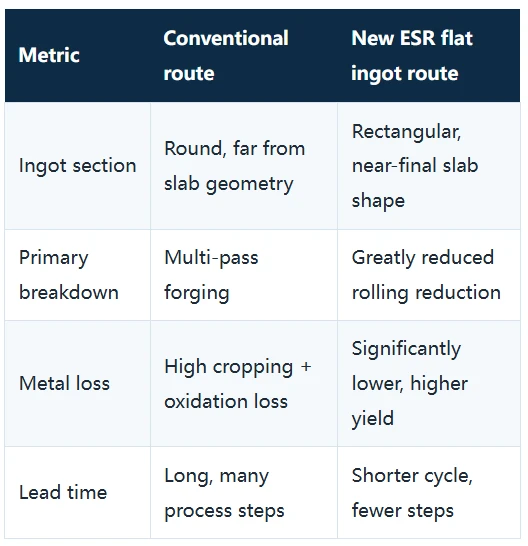
Producers of thick nickel alloy plate have historically relied on ESR round ingots followed by extensive forging: upsetting, drawing out, and heavy cropping. The route works, but it burns time and metal at every step. A rectangular ESR ingot, by contrast, solidifies into a shape much closer to the final rolled slab - a "replace forging with casting, one-step near-net-shape" conversion that cuts pass reduction, shortens the manufacturing cycle, and lifts overall yield.
The old route: a round ingot under the forging press
The engineering challenge scales with ingot tonnage. Deeper melt pools in rectangular sections widen the cooling-rate gap between corners and center, amplifying macrosegregation; mismatched slag chemistry, melting rate and fill ratio invite shrinkage porosity, surface defects and internal cracks. The plant's solution chained three stages into one controlled system: precise composition control in vacuum induction melting, steady-state forming during electroslag remelting, and homogenized solidification through the ingot body. Multiple trial iterations brought all three defect families under control.
The Numbers That Matter
The trial ingot is the entry point to a planned 6–12 ton ingot series, which sets the ceiling for achievable plate thickness and width. Volume supply from that series would reshape lead times and cost structures for fabricators of hydrogenation reactors, flue gas desulfurization absorbers, nuclear components and hydrogen storage and electrolysis equipment - segments currently anchored to imported plate.
A Sector Racing Up the Specification Curve
The development lands in the same week that a Chinese special-steel producer unveiled liquid-cooling grades for AI data-center heat exchangers and hydrogen storage grades rated for -253 °C liquid hydrogen. Alongside this ESR flat ingot milestone, the pattern is consistent: China's corrosion-resistant alloy and superalloy producers are competing less on tonnage and more on section size, cleanliness and certification capability - the three levers that decide who supplies high-end equipment projects.
What to watch next: batch-to-batch consistency data, heavy-plate NDT acceptance rates and mechanical-property uniformity across the 6–12 ton series. Those numbers, not the headline tonnage, will determine how fast imported nickel alloy plate is displaced from Chinese equipment fabrication after 2027.
FAQ
Q1: What is an ESR flat ingot, and how does it differ from a round ESR ingot?
An ESR flat ingot solidifies directly into a rectangular section with a dense structure and low inclusion levels. Its shape is close to the final slab, so primary reduction, cropping loss and processing cost all drop sharply.
Q2: What does "replace forging with casting, one-step near-net-shape" mean?
Casting a near-slab-shaped ingot by electroslag remelting instead of forging a round ingot through upsetting and drawing-out passes. Fewer steps, shorter cycle, higher yield.
Q3: Where is nickel alloy heavy plate used?
Hydrogenation reactors and heat exchangers, flue gas desulfurization absorbers, hydrometallurgy and chlor-alkali equipment, seawater desalination evaporators, nuclear components, and hydrogen storage or electrolysis equipment.