
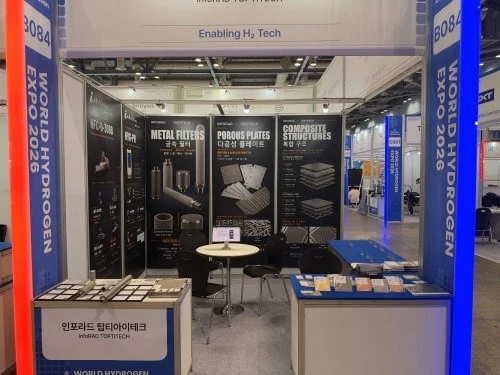
World Hydrogen Expo 2026 closed on November 6 after three days at KINTEX in Goyang. Co-located with H2 MEET and timed to South Korea's fifth statutory Hydrogen Day, the event drew 197 exhibitors from 12 countries and roughly 18,600 trade visitors.
A Fair That Shifted Its Language from Roadmaps to Bankability
The theme itself - "Hydrogen Moves to Market: Making Bankable Projects Work" - said as much as any keynote. Before the doors opened, organizers had projected 268 exhibitors from 22 countries and around 30,000 visitors. The final count: 197 exhibitors, 12 countries, about 18,600 attendees. The scale contracted, but the crowd that did arrive was more focused. Several exhibitors reported the same pattern: fewer casual visits, more detailed technical inquiries.
The conference program matched the tone. Ivana Jemelkova, CEO of the Hydrogen Council, Uwe Remme of the International Energy Agency (IEA), IPHE Executive Director Laurent Antoni, and ISO/TC 197 Chairman Tetsushi Ikeda each addressed project financing, technical standards and supply-chain realities. The fair was organized by the WHE Organizing Committee, co-chaired by Jung Dae-jin, President of the Korea Automobile & Mobility Association (KAMA), and Kim Jae-hong, President of the Korea H2 Alliance.
Two side programs stood out. KOTRA ran the H2 Business Partnership Fair, arranging one-on-one meetings between overseas buyers and suppliers. At the Country Day session dedicated to China, the Korea H2 Alliance, the Korea Agency for Infrastructure Technology Advancement (KAIA) and the China Energy Research Society (CERS) signed a tripartite memorandum of understanding.
On the policy side, South Korea launched its 2026 hydrogen power generation auction on October 30: 500 GWh of clean hydrogen and 930 GWh of conventional hydrogen. Clean hydrogen bids must stay under 4 kg CO₂ per kg of H₂, the non-price weighting in scoring rose from 40% to 50%, and awarded projects must be operational before 2030. A procurement pipeline of that size translates directly into demand for electrolyzers and their core components in the years ahead.
The TOPTITECH Booth: More Than 50 Technical Conversations
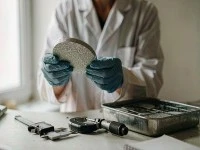
TOPTITECH (Baoji Yinggao Metal Materials Co., Ltd), founded in 2011, operates from the Baoji National High-Tech Zone in Shaanxi Province - the industrial cluster known as China's Titanium Valley. The company's core process is high-temperature sintering of high-purity titanium powder (purity ≥ 99.60%) into porous metal materials. Its products have long served major state-owned enterprises across hydrogen energy, petrochemicals, aerospace, medical and food industries.
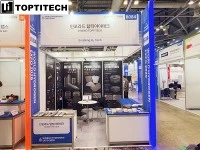
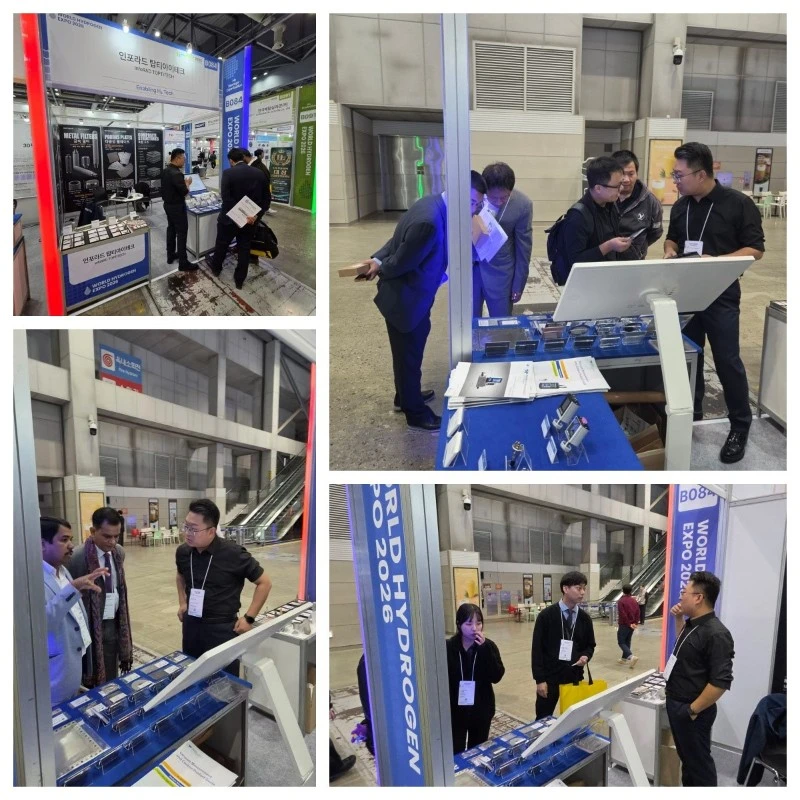
Over the three days, more than 50 clients from South Korea, Japan, Europe and the Middle East stopped at the TOPTITECH booth. Conversations centered on PTL material selection for PEM electrolyzers, sintering process parameters, and lead times for volume supply. Most of these discussions will move next to sample shipments and specification reviews - a normal pace for the materials industry, and the most valuable outcome of the trip.
Five Porous Metal Products on Display
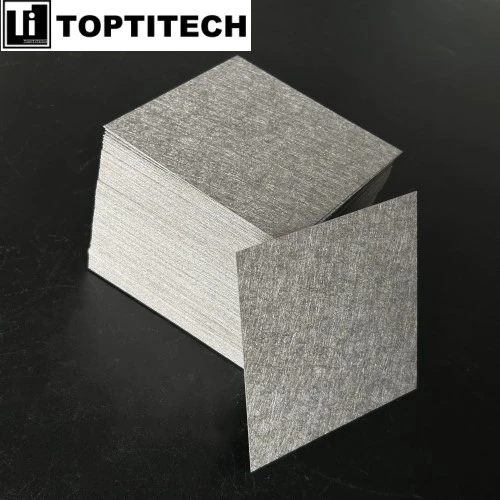
Titanium Fiber Felt
Sintered from pure titanium fibers, this porous felt serves as the anode porous transport layer (PTL) or gas diffusion layer (GDL) in PEM electrolyzers. It combines low contact resistance with high porosity and withstands the corrosive, high-potential acidic environment inside a PEMWE cell - one of the mainstream anode solutions for hydrogen production equipment today.
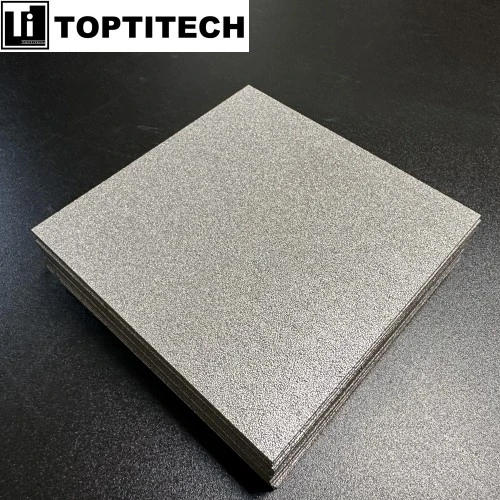
Sintered Porous Titanium Plate
Represented at the fair by a 20 μm-grade sintered plate with a uniform pore-size distribution, the material handles both gas diffusion and mechanical support inside the electrolyzer stack.
Nickel Fiber Felt
A porous nickel-based material developed for alkaline and AEM electrolyzers as well as fuel cell components, where it handles gas diffusion and current collection in alkaline hydrogen systems.
Titanium Expanded Mesh
A titanium mesh used as an electrode current collector, in filtration, and for gas distribution, pairing corrosion resistance with electrical conductivity.
Nickel Expanded Mesh
Mesh material for electrodes and current-collection assemblies in alkaline systems, with pore geometry and wire diameter customizable to each customer's stack design.
Closing Note
The hydrogen industry has entered a phase where projects are judged on arithmetic, and the materials behind an electrolyzer set its efficiency and its service life. TOPTITECH welcomes inquiries from electrolyzer manufacturers and system integrators worldwide on custom porous titanium and nickel solutions. Sample requests and technical discussions can be submitted through www.toptitech.com - our engineering team will follow up promptly.