
The main difference between sintered titanium plate and fiber felt is their physical structure. Sintered titanium plates are solid, flat sheets made of compressed titanium powder, while sintered titanium fiber felt is a porous, three-dimensional structure made of interconnected titanium fibers.

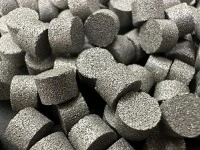
Titanium porous plates

Titanium fiber felt
Here are some other differences between sintered titanium plates and fiber felt:
Porosity: Sintered titanium fiber felt has a much higher porosity than sintered titanium plates. The high porosity of the fiber felt results in a larger surface area, which makes it an ideal material for filtration, gas diffusion, and other applications that require high surface area.
Strength: Sintered titanium plates are generally stronger than sintered titanium fiber felt due to their solid structure. However, sintered titanium fiber felt is still a strong material, and its high porosity can actually make it more resistant to impact and stress.
Flexibility: Sintered titanium fiber felt is more flexible than sintered titanium plates due to its fibrous structure. This flexibility makes it easier to shape and mold the material to fit specific applications.
Manufacturing process: The manufacturing processes for sintered titanium plates and fiber felt are different. Sintered titanium plates are made by compressing titanium powder into a solid sheet and then sintering it at high temperatures. Sintered titanium fiber felt is made by sintering titanium fibers together to create a three-dimensional structure.
In summary, sintered titanium plates and fiber felt have different physical structures and properties. Sintered titanium plates are solid and generally stronger, while sintered titanium fiber felt is porous, more flexible, and has a higher surface area. The choice between the two materials will largely depend on the specific requirements of the application.