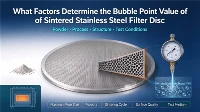
Titanium fiber felt and porous titanium plate are two popular titanium products that exhibit variances in their raw materials, manufacturing processes, surface characteristics, performance, and applications. Below is a detailed description of these variances:

Titanium Powder
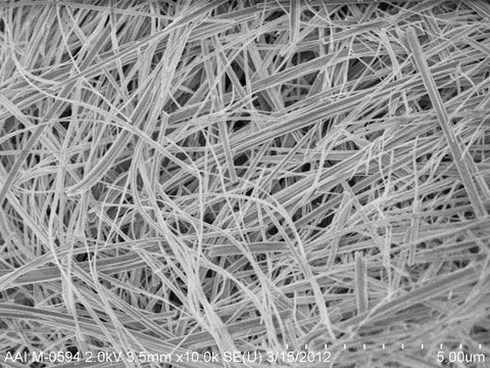
Titanium Fiber
Raw Materials:
Titanium Fiber Felt: Titanium fiber felt is typically composed of bundles of titanium fibers, which consist of fiber filaments or tapes with diameters ranging from a few micrometers to tens of micrometers.
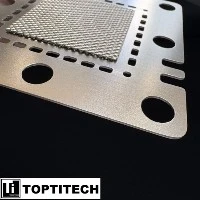
Porous Titanium Plate: Porous titanium plate is usually made from pure titanium or titanium alloy materials, crafted using specialized techniques to produce a plate with a porous structure.
Manufacturing Processes:
Titanium Fiber Felt: The manufacturing methods for titanium fiber felt include wet spinning, dry spinning, and melt spinning. Fiber bundles undergo stretching and solidification through spinning equipment to form continuous fiber felt.
Porous Titanium Plate: The production of porous titanium plate commonly involves processes such as powder metallurgy, foam template method, or chemical etching. By controlling the composition and processing parameters of the powder, a plate with a specific porosity is achieved.

Titanium fiber felt VS. Porous titanium plate

Titanium fiber felt VS. Porous titanium plate
Surface Characteristics:
Titanium Fiber Felt: The surface of titanium fiber felt typically exhibits a fine fibrous structure, providing a larger surface area and roughness.
Porous Titanium Plate: The surface of porous titanium plate features numerous controlled pores, whose shapes and sizes can be adjusted based on the manufacturing process.
Performance:
Titanium Fiber Felt: Titanium fiber felt offers a higher specific surface area, resulting in improved wetting and adsorption properties. It also exhibits good flexibility and malleability, allowing for convenient shaping and processing.
Porous Titanium Plate: Porous titanium plate possesses a higher porosity and lower density, providing excellent adsorption capability and a larger surface area. It also has a lower weight and good mechanical strength, making it suitable for applications in filtration, adsorption, and biomedical fields, among others.

Porous titanium plate

Titanium fiber felt
Applications:
Titanium Fiber Felt: Titanium fiber felt finds wide applications in aerospace, automotive, and medical device industries. Its large specific surface area and good wetting properties make it suitable for applications such as batteries, catalyst supports, and filtration materials.
Porous Titanium Plate: Porous titanium plate is primarily used in filtration, adsorption, biomedical, acoustic, and heat exchange applications. Due to its well-defined porous structure and large surface area, it is commonly employed in fields such as filter media, bone scaffolds, and catalyst carriers.