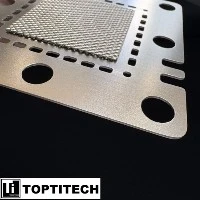

As a high-performance α+β phase titanium alloy, TC6 has become a cornerstone material across mission-critical industries due to its exceptional strength-to-density ratio and corrosion resistance. This alloy's unique metallurgical properties demand specialized manufacturing processes to unlock its full potential while addressing inherent challenges in industrial scalability.

Surface engineering solutions have expanded TC6's operational boundaries across corrosive environments. Micro-arc oxidation and thermal spray coatings yield ceramic-reinforced interfaces that withstand simultaneous mechanical wear and chemical degradation. These treatments prove indispensable in offshore drilling components and biomedical implants where long-term stability under multiphase interactions is non-negotiable.
The alloy's adaptability shines in next-generation applications. Aerospace innovators leverage TC6's thermal stability for reusable spacecraft propulsion systems, while energy developers utilize its hydrogen compatibility in high-pressure fuel cell architectures. Emerging hybrid manufacturing approaches integrate additive techniques with conventional subtractive processes, enabling topology-optimized geometries previously unattainable through standard forming operations.
Ongoing research focuses on sustainable production methodologies, including closed-loop recycling of machining swarf and AI-driven thermal process optimization. Material scientists are refining β grain stabilization techniques to enhance creep resistance for next-gen turbine applications, while exploring composite interfaces with carbon-based materials for synergistic performance gains.
As industries push operational envelopes in extreme environments, TC6 titanium alloy continues to evolve beyond traditional aerospace dominance. Its processing advancements and application versatility position it as a strategic material in humanity's pursuit of advanced mobility solutions and energy transition technologies, demonstrating how metallurgical innovation drives cross-sector technological progress.