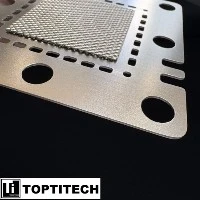

The porous transport layer (PTL) is an indispensable key functional component in water electrolysis stacks for hydrogen production. In proton exchange membrane (PEM) electrolyzers, the PTL is positioned between the anode catalyst layer and the bipolar plate, performing four essential functions: gas-liquid mass transport, electron conduction, heat transfer, and mechanical support. Its performance directly determines the ohmic losses, mass transport efficiency, and long-term operational stability of the electrolyzer.
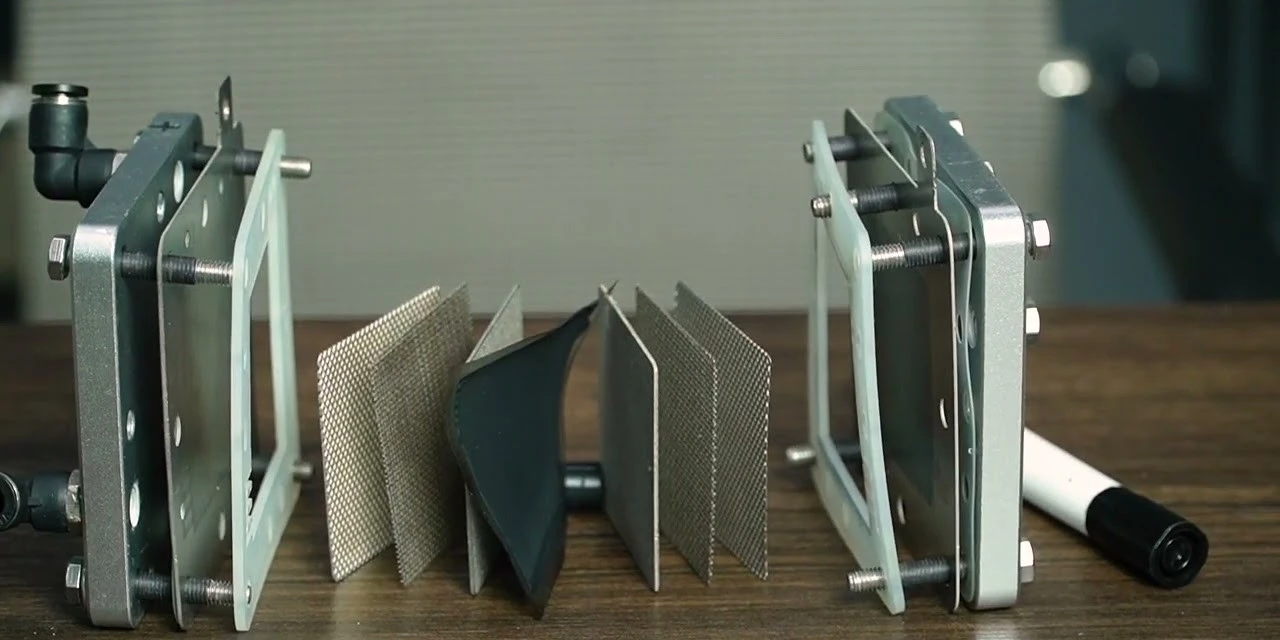
From a technology evolution perspective, PTL has undergone an iterative process from titanium mesh → sintered titanium powder plate → titanium fiber felt. Currently, titanium fiber sintered felt (commonly known as "titanium felt") is the most widely used PTL in the global PEM water electrolysis market, with mainstream products having a porosity of approximately 50%-70% and a thickness between 200-400 micrometers. In anion exchange membrane (AEM) systems, nickel felt and nickel mesh are the mainstream choices.
Structural Bottlenecks and Technical Limitations of Single-Layer PTLs
Although single-layer titanium felt and nickel felt have gained widespread industrial application due to their relatively simple manufacturing process and high porosity, their inherent structural deficiencies have become increasingly prominent under high current density operating conditions.
 First, mass transport resistance. The internal pore structure of titanium fiber felt is randomly distributed, causing reactant water and product oxygen bubbles to follow tortuous, high-resistance pathways during transport. Particularly under high current density conditions (>1.5 A/cm²), mass transport losses intensify significantly, becoming a critical bottleneck restricting electrolyzer performance improvement.
Second, interfacial contact resistance. The surface pore structure of titanium felt is randomly distributed, forming line contact rather than surface contact with the catalyst layer. This limits the effective contact area, not only increasing interfacial ohmic resistance but also reducing the number of three-phase reaction sites and lowering catalyst utilization.
Third, mechanical stability and membrane damage risk. The surface pore sizes of titanium felt vary considerably, with standard deviations large enough that some pores can exceed 150 micrometers. During high-pressure hydrogen output at the cathode, the pressure differential between anode and cathode can cause the membrane electrode assembly to be "pushed" into larger pores, creating "bulging" or even shear stress damage. Additionally, the PTL must withstand clamping pressure during stack assembly to reduce interfacial contact resistance, but excessive pressure leads to decreased PTL porosity, which in turn deteriorates mass transport performance. Research indicates that clamping pressures exceeding 2.5 MPa cause simultaneous degradation of ohmic conductivity and mass transport performance, with mechanical degradation contributing more than 17% to total electrolyzer performance decay.
Fourth, the performance trade-off dilemma of single structures. From a structural type perspective, fiber felt (F-PTL) achieves sufficient contact with the catalyst layer and lower interfacial resistance, but its disordered pores limit mass transport efficiency. Metal mesh (M-PTL) features ordered large-pore structures with unobstructed mass transport, but insufficient contact area with the catalyst layer results in higher interfacial resistance. A single structure cannot simultaneously satisfy the dual requirements of low ohmic loss and low mass transport loss.
Multi-Layer Composite PTLs: Structural Design Principles and Performance Advantages
To address the structural bottlenecks of single-layer PTLs, multi-layer porous media composite PTLs have emerged. The core design philosophy is to integrate functional layers with different pore size scales and different structural types into a single body through sintering processes, achieving synergistic performance optimization.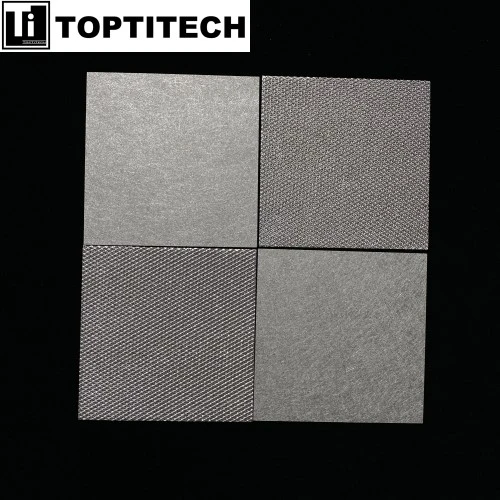
1. Gradient Porosity Structure Design
The most typical design strategy for multi-layer composite PTLs is to construct a pore size gradient. Taking a titanium felt and titanium mesh composite structure as an example, the metal mesh layer with larger pore sizes is placed on the side near the flow field, utilizing its ordered large pores to provide low-resistance gas-liquid transport channels. The fiber felt layer with smaller pore sizes is placed on the side near the catalyst layer, utilizing its fine pores to ensure uniform contact and low interfacial resistance with the catalyst layer.
2. Process Advantages of Sintered Composite Bonding
Multi-layer composite PTLs are not simple physical stacks but are firmly bonded into an integrated structure through diffusion bonding processes. The sintering process forms metallurgical bonds at material contact interfaces, making interlayer connection strength far superior to mechanical stacking while preserving the original pore characteristics of each layer.
3. Performance Synergy Effects
The performance advantages of multi-layer composite PTLs can be summarized across the following dimensions:
►Improved mass transport efficiency. Large-pore layers provide low-resistance channels for gas-liquid two-phase flow, while small-pore layers maintain capillary pressure-driven water permeation. Together, they enable water supply and oxygen removal to each serve their respective roles at different scales.
►Reduced ohmic losses. The small-pore fiber felt layer forms surface contact with the catalyst layer, increasing effective contact area and reducing interfacial contact resistance. Sintered bonding eliminates interlayer contact resistance, creating continuous and unobstructed electron conduction pathways.
►Enhanced mechanical stability. The overall rigidity of sintered composite structures exceeds that of single-layer felt materials, with less deformation under clamping pressure and better preservation of pore structure integrity. Simultaneously, the multi-layer structure provides more uniform mechanical support to the membrane electrode assembly, reducing membrane damage risk.
►Functional integration. As indicated by search results, multi-layer sintered laminates are integrated solutions that can replace bipolar plate-GDL-to-membrane assemblies, making installation operations more convenient. This integration trend represents the industry direction of PTL evolving from "single-function component" to "multi-functional integrated module."
Industry Trends and Technology Outlook
Regarding technology trends, future PTL development will focus on the following directions: gradient porosity PTLs optimizing gas-liquid transport pathways through continuous pore size variation; ultra-thin titanium structures reducing material usage and ohmic losses while ensuring mechanical strength; noble metal-coated PTLs suppressing titanium passivation through Ir, Pt, Au and other coatings to reduce contact resistance; and integrated multi-functional transport layers further eliminating interfaces between components to improve system reliability and assembly efficiency.
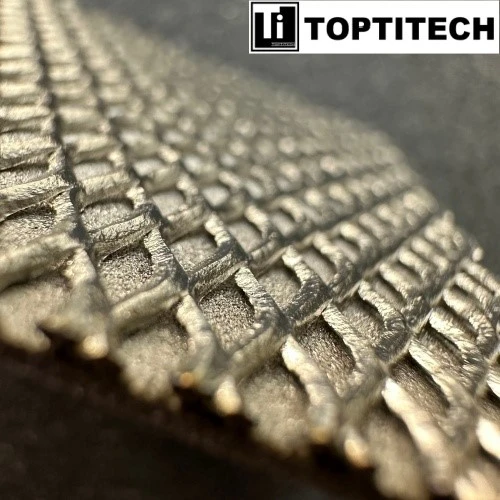
As an important technological branch in this evolution path, the core value of multi-layer composite PTLs lies in breaking through the performance ceiling of single materials through structural design. By organically combining the "contact advantages" of fiber felt with the "mass transport advantages" of metal mesh, and achieving structural integration through sintering processes, these products find a new balance point for electrolyzers among the goals of higher current density, longer operational lifetime, and lower noble metal usage. For electrolyzer manufacturers, understanding and mastering the structure-performance relationships of composite PTLs will become a key capability for next-generation high-efficiency electrolysis system design.