
Having mastered the six core dimensions for judging nickel felt quality-ranging from appearance and purity to porosity, mechanical strength, and electrochemical performance-you are now able to preliminarily screen out qualified nickel felt products. However, to truly distinguish between "high-quality nickel felt" and products that are merely "qualified but mediocre," and to avoid costly mistakes in real-world applications, it is essential to dig deeper into the production process, supplier qualifications, and commonly overlooked procurement pitfalls.
The following section from TOPTITECH will help you evaluate nickel felt quality more comprehensively and accurately from three key perspectives: manufacturing process integrity, quality assurance systems, and practical trap avoidance.
Check Production Process and Qualifications: Avoid Quality Risks from the Source
The core of nickel felt quality depends on the production process and enterprise qualifications. There is a huge gap in the production process between high-quality nickel felt and inferior nickel felt. When purchasing, focus on 2 points:
1. Production Process: Vacuum Sintering is the Core Standard
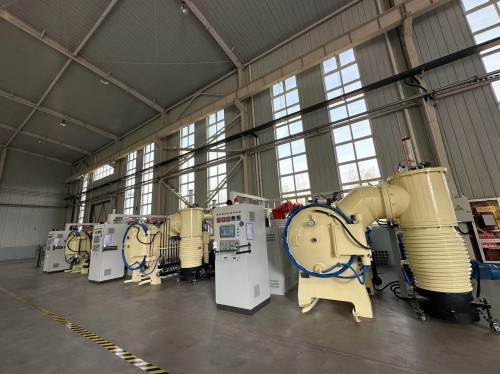
High-quality nickel felt adopts an integrated process of "melt spinning - bundle drawing - wet laying - vacuum sintering". Vacuum sintering can effectively control oxygen content and grain size, ensuring that nickel felt fibers are closely bonded, low in oxidation, and stable in product performance; while inferior nickel felt mostly adopts ordinary high-temperature sintering, or even omits the sintering link, and is only formed by simple pressing. The fibers are loosely bonded, easy to shed and oxidize, and have an extremely short service life.
When purchasing, you can ask the supplier about the production process and request a production process description. Prioritize enterprises that adopt vacuum sintering technology and have intelligent production lines (for example, online monitoring and AI process control systems introduced by leading domestic enterprises can reduce the performance fluctuation between batches to less than 8%).
2. Enterprise Qualifications and Test Reports: Reject "Three-No" Products
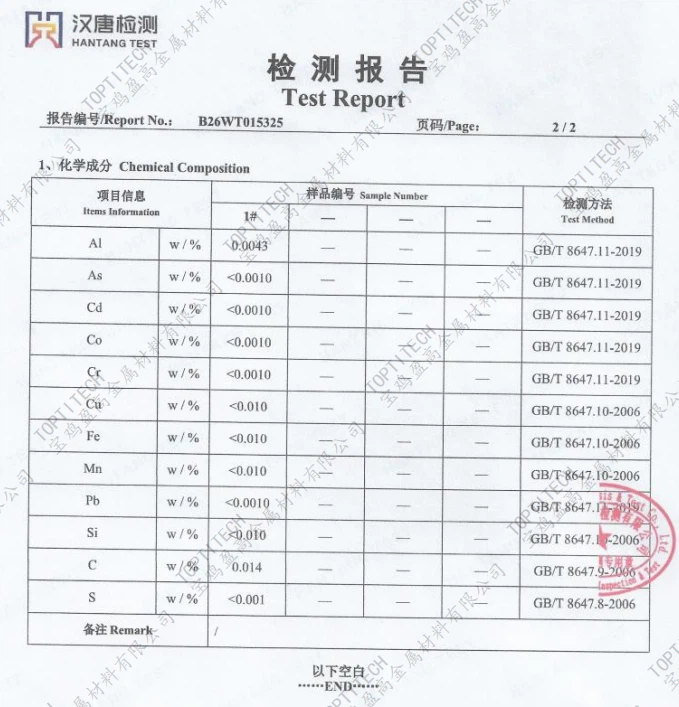
Suppliers of high-quality nickel felt should have complete production qualifications and quality inspection systems, and can provide authoritative test reports (such as material analysis reports, porosity test reports, and mechanical performance test reports).
At the same time, you can check the supplier's industry reputation and cooperation cases (such as whether they cooperate with leading electrolyzer and fuel cell enterprises) to avoid purchasing "three-no" products-such products have no detection guarantee, uneven quality, and are very likely to cause production accidents.
Pitfall Avoidance Guide: 3 Common Mistakes to Watch Out for When Purchasing Nickel Felt
Many purchasers are prone to the following 3 mistakes when judging the quality of nickel felt, leading to the purchase of inferior products. Focus on avoiding them:
- Mistake 1: Only focus on price and ignore purity-low-priced nickel felt is mostly made of low-purity raw materials with high impurity content. Although it seems cost-effective for short-term use, the long-term replacement cost and equipment loss cost are higher;
- Mistake 2: Only focus on appearance and ignore pore and conductive performance-some inferior nickel felt seems qualified in appearance, but has uneven pore distribution and high contact resistance, which cannot be adapted to core scenarios such as electrolyzers, and is prone to efficiency decline and equipment failure after use;
- Mistake 3: Purchase blindly without looking at test reports-nickel felt without test reports cannot confirm its core indicators such as nickel content and porosity, and its quality cannot be guaranteed. Especially when used in high-end electrolyzers and fuel cells, the test data must be strictly verified.
Summary: Core Judgment Standards for High-Quality Nickel Felt
To judge the quality of nickel felt, the core is "qualified appearance, up-to-standard performance, regular craftsmanship, and complete qualifications", which can be briefly summarized as:
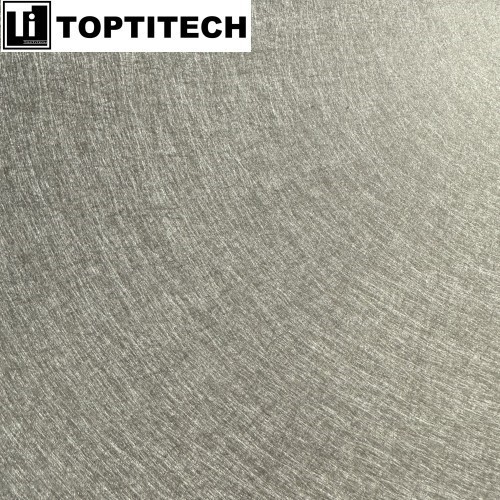
1. Appearance: Uniform silver-gray luster, no oxidation, no broken wires, neat edges, and uniform thickness;
2. Performance: Nickel content ≥99.0%, porosity 60%-80%, uniform pore size distribution, low contact resistance, high mechanical strength, corrosion resistance, and high-temperature resistance;
3. Process: Adopt the vacuum sintering process with a standardized production process;
4. Qualifications: Can provide authoritative test reports, in line with industry standards, and the enterprise has a good reputation and cooperation cases.
As a core component of equipment such as electrolyzers and fuel cells, the quality of nickel felt is directly related to production efficiency and equipment safety. Mastering the above judgment methods can effectively avoid procurement pitfalls and select high-quality nickel felt suitable for your own scenarios. If you need to customize nickel felt according to specific application scenarios (such as water electrolysis for hydrogen production, high-temperature filtration), you can prioritize enterprises with independent R&D and testing capabilities to ensure that product performance is accurately matched with working conditions.