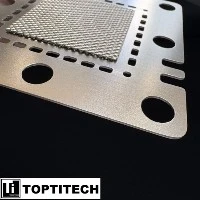

Platinum plating on titanium fiber felt is a commonly used process to form a platinum layer on the surface of the fiber felt. There are several methods available for platinum plating on titanium fiber felt, including electroplating, brush coating, and sputtering.


Each method has its unique process, advantages, and disadvantages, and the selection of the appropriate method depends on the specific requirements, budget, and available resources.

Electroplating is a technique that involves depositing a metal onto a conductive substrate. In the case of platinum plating on titanium fiber felt, the felt is used as the cathode, and platinum ions from a platinum salt solution are reduced and deposited onto the surface of the felt. By controlling parameters such as current density, bath composition, and plating time, the amount and uniformity of platinum deposition can be adjusted. Electroplating enables the formation of a relatively thick and uniformly distributed platinum layer on the entire surface of the titanium fiber felt. However, this method requires specialized equipment, electroplating processes, and the management of waste solutions, making it a more complex process.
Brush coating involves directly applying a platinum solution or paste onto the surface of the titanium fiber felt. First, a liquid or paste containing platinum particles is prepared, and then it is applied to the felt using a brush or spray applicator. Brush coating allows for the formation of a thinner platinum layer and enables localized deposition in specific areas. The advantage of this method lies in its simplicity, as it does not require complex equipment or processes. However, the uniformity of the coating may be influenced by the coating technique, and the quality and adhesion of the coating may not be as optimal as with other methods.


Sputtering is a physical vapor deposition (PVD) technique that involves the deposition of platinum atoms or ions onto the surface of the titanium fiber felt in a vacuum environment. During the sputtering process, the fiber felt is placed as the substrate opposite the platinum target. By controlling sputtering parameters such as deposition time, power, and gas pressure, a uniform platinum thin film can be formed on the titanium fiber felt. Sputtering offers high deposition rates and excellent adhesion, making it suitable for large-area, uniform deposition. However, sputtering requires specialized equipment, a vacuum environment, and involves higher costs compared to other methods.

Titanium fiber felt with platinum plating has a wide range of applications. It is extensively used as an efficient catalyst support in chemical synthesis, environmental protection, and energy fields. Additionally, platinum-plated titanium fiber felt finds application in both the anode and cathode catalytic layers of fuel cells, enhancing their efficiency and stability. It is also utilized as the working electrode in electrochemical sensors for the detection and measurement of gases and organic substances. Moreover, in the areas of battery materials and filtration/separation, platinum-plated titanium fiber felt plays a crucial role. By selecting appropriate platinum plating methods and optimizing processes, uniform and efficient platinum coatings can be achieved on titanium fiber felt, thereby enhancing the performance and effectiveness across various applications.