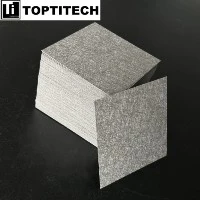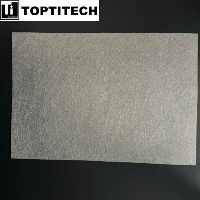

Stainless steel powder sintered small filter discs are porous metal filtration elements produced via powder metallurgy. Using stainless steel powder as the raw material, these discs undergo sieving, die pressing, and high-temperature sintering to form a rigid porous structure with controllable pore characteristics. They exhibit excellent high-temperature resistance, corrosion resistance, mechanical strength, and backwash regenerability, with filtration accuracy ranging from 0.5 to 100 μm. They are widely used in petrochemical, pharmaceutical, food and beverage, electronics, and environmental protection applications.


The core manufacturing workflow can be summarized as: Powder Sieving → Die Pressing → High-Temperature Sintering → Post-Processing. Each stage is elaborated below.
Powder Sieving
The Foundation of Particle Size Control
 Sieving is the first step in manufacturing sintered stainless steel filter discs. Its purpose is to classify the raw metal powder into specific particle size ranges according to the target filtration accuracy.
Stainless steel powder is typically produced by gas or water atomization, with 304L and 316L being the most common grades. Particle morphology is generally spherical or irregular. Standard vibrating screening equipment with different mesh sizes is used to separate the powder into distinct fractions – for example, coarse powder (96–150 μm) for the porous support layer, and fine powder (<25 μm) for the filtration control layer .
Critical Importance of Sieving: The final filtration accuracy of the filter disc is positively correlated with powder particle size – finer particles produce smaller pores and higher filtration accuracy, but at the cost of reduced permeability. Therefore, the powder particle size distribution must be matched to the target accuracy (e.g., 0.5 μm, 5 μm, 20 μm) . For asymmetric (graded) filter discs, where the support layer and filtration layer use different particle sizes, sieving is the prerequisite for achieving functional gradation.
Professional Insight: In high-end applications, a "graded particle" design is often employed to balance filtration accuracy and permeability – coarse powder in the support layer ensures mechanical strength and high flow rate, while fine powder in the top layer provides precise particle retention.
Die Pressing
Shaping and Imparting Initial Strength
Die pressing is the process where classified stainless steel powder is compacted in rigid dies under uniaxial or biaxial pressure to form green compacts in the desired shape (round, square, or custom profiles).
 1. Die Filling and Layering
The classified powder is uniformly filled into steel or cemented carbide die cavities. For multi-layer graded discs, coarse powder is placed first (support layer), followed by fine powder (filtration layer), with each layer kept clearly defined.
2. Compaction Process
Hydraulic presses apply high pressure to rearrange powder particles and induce plastic deformation, creating mechanical interlocking that yields green compacts with sufficient strength. Typical compaction pressures range from 50 to 200 MPa, depending on disc size, powder particle size, and target porosity.
Process Highlights:
Pressure Gradient Technology: For asymmetric (graded) discs, the compaction pressure for each layer should increase as the powder particle size decreases – i.e., the fine powder layer is pressed at a higher pressure than the coarse layer. This design effectively prevents cracking or delamination caused by differential shrinkage during sintering.
Additive Usage: Small amounts of resin or lubricants may be added to improve powder flowability and green strength; these binders are completely volatilized during subsequent sintering.
3. Demolding
After compaction, the green compact is ejected from the die and proceeds to the next stage. The advantages of die pressing are high batch production efficiency, excellent dimensional consistency, and superior surface flatness, making it particularly suitable for small-to-medium-sized discs (Φ10–200 mm).
Process Comparison: Compared to Cold Isostatic Pressing (CIP), die pressing offers lower cost and faster cycle times, but large or ultra-thin parts may suffer from density inhomogeneity. CIP is preferred for extra-large or ultra-thin components requiring extremely uniform density.
High-Temperature Sintering
The Critical Performance-Defining Step
Sintering involves placing the demolded green compacts in a high-temperature furnace under controlled atmospheres, heating to just below the melting point of the metal (typically 1100–1300°C). This enables atomic diffusion between particles, forming metallurgical "sintering necks" that impart final mechanical strength and the characteristic porous structure.
1. Sintering Atmosphere
The choice of atmosphere directly affects surface quality and performance:
Vacuum Sintering: Typically with vacuum levels better than 9.0×10⁻³ Torr, producing clean, bright, oxidation-free surfaces – a common choice for high-quality stainless steel filters.
Hydrogen or Inert Gas Sintering: Prevents oxidation and is suitable for specific materials or applications requiring decarburization control.

2. Heating Profile
To prevent cracking during heating – caused by thermal stress or rapid decomposition of residual additives – a slow heating rate is essential. Typical ramp rates are 3–10°C/min, with appropriate holding periods at specific temperature ranges (e.g., during binder burnout).
3. Soaking and Cooling
Upon reaching the target sintering temperature, the parts are held for 1–4 hours to ensure complete diffusion bonding and stable sintering neck formation. The furnace is then cooled to room temperature, yielding the finished filter discs.
Sintering Shrinkage: During sintering, the green compacts undergo volumetric shrinkage – radial shrinkage typically ranges from 0.8% to 4.0%, while thickness shrinkage ranges from 1.7% to 3.3%. This must be compensated for during die design.
Post-Processing and Quality Inspection
Sintered discs can be further machined to customer specifications, including CNC milling, drilling, tapping, wire EDM, etc., to produce mounting holes, sealing grooves, flanges, or other features for equipment integration. Passivation or electropolishing may also be applied to enhance corrosion resistance and surface cleanliness.
Standard Quality Checks:
Bubble Test Maximum Pore Size – indicates filtration accuracy
Permeability Coefficient – reflects flow capacity
Porosity – typically ranging from 30%–45%
Ring Tensile Strength – validates mechanical reliability
Conclusion
The manufacturing of stainless steel powder sintered small filter discs is a systematic engineering process integrating powder metallurgy, materials science, and precision process control. From sieving and grading to die pressing and high-temperature sintering, every step critically determines the final product's filtration accuracy, mechanical strength, and service life. Mastery of the core parameters and process logic at each stage is the key to producing high-quality sintered filter discs.