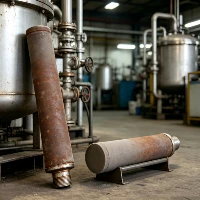

Fine chemical processing and pharmaceutical manufacturing rely heavily on high-purity liquid purification, precise micro-impurity removal, and consistent batch production stability. Most core manufacturing procedures involve highly corrosive process media, including dilute nitric acid, acetic acid, phosphoric acid, chloride-containing solutions, and complex organic solvent mixtures. Traditional filter media such as stainless steel sintered plates, plastic filter elements, and woven mesh filters commonly develop irreversible performance defects in these harsh corrosive working environments, including chemical corrosion, metal ion precipitation, pore deformation, frequent clogging, and shortened service life. These widespread filtration issues lead to unplanned production shutdowns, elevated maintenance costs, unstable product purity, and potential safety hazards for finished pharmaceutical and fine chemical products. As a high-performance porous metal filtration medium, the sintered titanium filter plate has become a premium core filtration component dedicated to corrosive liquid purification, thoroughly resolving the long-standing bottlenecks of conventional filtration solutions in fine chemical and pharmaceutical production lines.
Advantages of Sintered Titanium Filter Plate for Corrosive Liquid Filtration
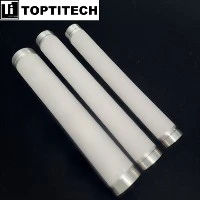
Unlike ordinary stainless steel, plastic and polymer filter materials, high-quality sintered titanium filter plates are manufactured via high-pressure compaction and high-temperature integral sintering of pure titanium powder. This advanced production process forms a seamless three-dimensional interconnected porous structure with uniform pore distribution, high structural density, and exceptional mechanical stability. The unique material properties and integrated structural design enable sintered titanium filter media to fully meet the rigorous purity, precision, and long-cycle operational standards required by modern fine chemical and pharmaceutical industries.
The most competitive advantage of the sintered titanium filter plate is its outstanding multi-environment corrosion resistance. High-purity titanium substrates maintain stable physical and chemical properties in acidic solutions, chloride-rich media, and various organic corrosive environments, effectively resisting long-term erosion from pharmaceutical process liquids and fine chemical solvents. Unlike stainless steel filters that easily suffer acid oxidation, chloride corrosion and heavy metal leaching, sintered titanium filter plates eliminate secondary contamination risks, ensuring ultra-high purity of chemical intermediates, pharmaceutical preparations and biological liquids during the entire filtration process.
The one-piece sintered construction delivers stable filtration accuracy and ultra-long service life, two critical indicators for industrial continuous production. Featuring customizable micropore sizes ranging from 1μm to 180μm, the interconnected porous structure achieves precise gradient filtration, efficiently intercepting fine suspended particles, catalyst residues, micro sediments and tiny impurities in corrosive process liquids. As a rigid porous metal medium, the sintered titanium filter plate resists liquid impact, pressure load and structural fatigue, avoiding pore deformation and particle leakage that plague flexible filter materials. It maintains consistent and reliable filtration precision during long-term uninterrupted industrial operation.
Sintered titanium filter plates achieve an optimal balance of high filtration efficiency, stable fluid permeability and low pressure drop, ensuring smooth circulation of corrosive process liquids without restricting production throughput. Additionally, this reusable filter medium features excellent regeneration performance suitable for industrial cleaning standards. The rigid integral porous structure supports multiple professional cleaning methods, including high-pressure backwashing, ultrasonic cleaning, and online CIP (Clean-in-Place) sterilization. Repeated regeneration and reuse drastically reduce filter replacement frequency, production downtime and comprehensive operational costs for fine chemical and pharmaceutical filtration systems.
Industrial Application Scenarios
- Fine Chemical Purification: Filtration and impurity removal of acidic reaction solutions, organic solvents, chloride-containing process liquids, and fine chemical intermediates; recovery and purification of catalytic materials in chemical synthesis reactions.
- Pharmaceutical Liquid Filtration: Sterile filtration and decarbonization filtration of pharmaceutical injections, oral preparations and biological solutions; purification of raw material liquids in pharmaceutical synthesis to eliminate microscopic impurities and ensure pharmaceutical batch stability.
- Process Water Treatment: Precision filtration and impurity removal of corrosive circulating water and desalinated water in pharmaceutical and fine chemical workshops, protecting subsequent precision equipment and purification systems.
- High-purity Medium Separation: Solid-liquid separation of high-value corrosive chemical materials, realizing resource recovery and reducing production waste while ensuring product purity compliance.
Why It Outperforms Traditional Filter Media for Pharmaceutical & Fine Chemical Industries?
Conventional filter media struggle to adapt to the harsh working conditions of corrosive liquid filtration in pharmaceutical and fine chemical production. Plastic and PTFE filter elements feature low pressure resistance and poor thermal stability, prone to aging and pore collapse under long-term erosion of high-temperature organic solvents and strong acidic liquids, resulting in filtration failure. Standard stainless steel sintered filters are highly susceptible to chloride corrosion and acid oxidation, releasing harmful metal ions that fail to meet pharmaceutical-grade purity and GMP hygiene standards. In comparison, the sintered titanium filter plate integrates exceptional anti-corrosion performance, high mechanical rigidity, stable filtration precision and contamination-free material characteristics. It fully complies with strict GMP workshop specifications and adapts to high-intensity, long-cycle continuous operation, making it a superior alternative to traditional filter media for high-end industrial filtration.
Conclusion
As fine chemical synthesis and pharmaceutical manufacturing continue upgrading toward high product purity, low energy consumption and stable long-cycle production, industrial demand for anti-corrosion, high-precision and reusable filtration components has grown rapidly. The sintered titanium filter plate perfectly solves core industry pain points, including corrosion failure, pore instability and product secondary contamination caused by traditional filter media in corrosive liquid filtration scenarios. Serving as a reliable, cost-effective and high-standard industrial filtration solution, it is widely adopted in high-end fine chemical purification, pharmaceutical preparation processing, biological liquid filtration and various precision corrosive medium separation fields.