
Ozone (O₃) has solidified its role as a transformative technology in wastewater management, driven by its unparalleled oxidative capacity to degrade recalcitrant pollutants, neutralize pathogens, and enhance water reuse viability. This gas-phase oxidant operates through dual pathways: direct molecular interactions with contaminants and indirect chain reactions mediated by hydroxyl radicals (•OH), short-lived but highly reactive species generated during ozone decomposition in aqueous environments. Industrial adoption hinges on ozone's ability to address multifaceted challenges-from pharmaceutical residues in municipal effluents to toxic dyes in textile wastewater-while aligning with tightening environmental regulations.
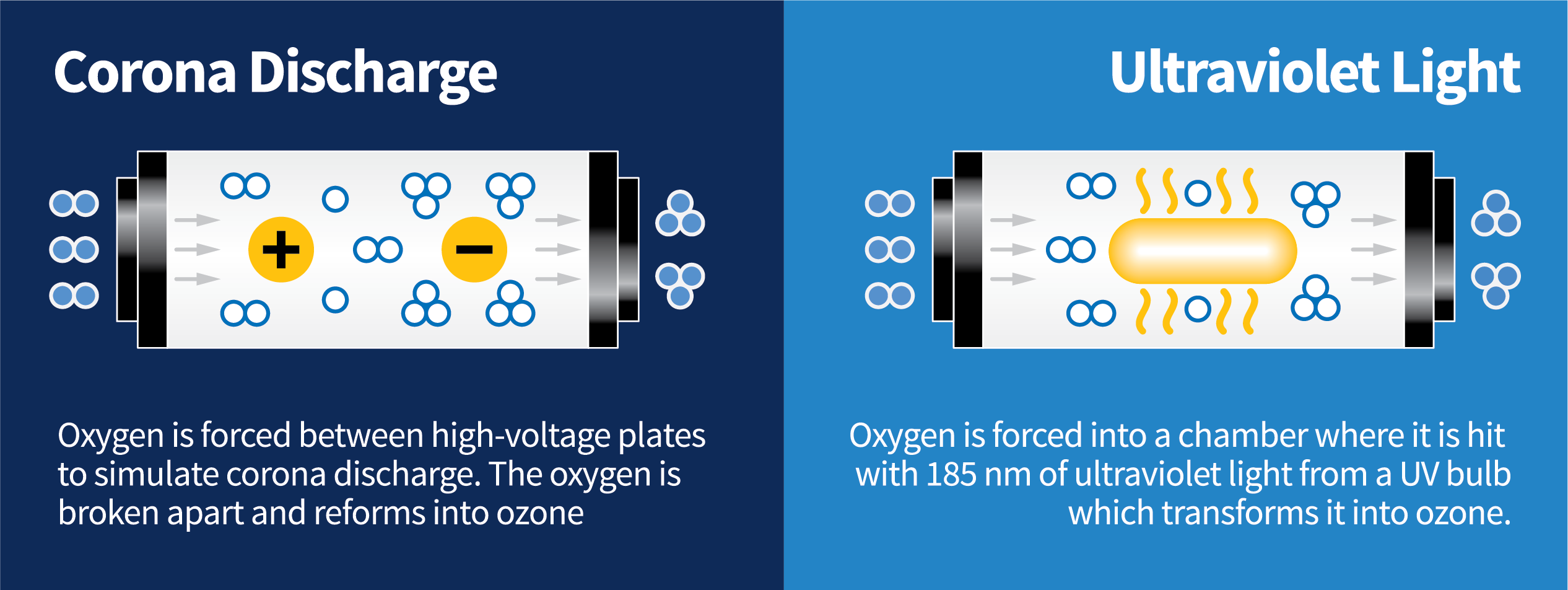
The synthesis of ozone relies on energy-intensive processes such as corona discharge or ultraviolet photolysis. In corona discharge systems, oxygen molecules (O₂) dissociate into atomic oxygen under high-voltage electric fields, recombining with O₂ to form ozone. UV-based generators utilize light at 185 nm wavelength to split oxygen molecules, achieving similar outcomes with reduced ozone yield but higher purityWhen ozone dissolves in wastewater, it quickly oxidizes organic substances through electrophilic attack, cleaving carbon-carbon bonds, shattering aromatic rings, and mineralizing complex chemicals such as endocrine disruptors or pesticides. Simultaneously, its indirect pathway generates •OH radicals, which non-selectively degrade pollutants through hydrogen abstraction or electron transfer, enabling efficient removal of sulfides, cyanides, and heavy metal complexes.
A key advantage of ozonation lies in its operational versatility. Unlike chlorine-based disinfection, which produces carcinogenic byproducts such as trihalomethanes, ozone leaves no toxic residuals, making it ideal for industries prioritizing water reuse. Municipal treatment plants integrate ozone into tertiary stages to achieve pathogen inactivation rates exceeding 99.99%, ensuring compliance with EPA reuse standards for irrigation or aquifer recharge. In industrial contexts, sectors like food processing leverage ozone to oxidize lipids and proteins in slaughterhouse effluents, while textile manufacturers deploy it for decolorizing dye-laden streams, achieving 90% reduction in chromophore intensity. Hybrid systems combining ozone with UV irradiation or hydrogen peroxide amplify oxidation efficiency, particularly for trace pharmaceuticals and perfluoroalkyl substances (PFAS), which resist conventional biological treatment.
Despite its merits, ozone implementation faces practical hurdles. Energy consumption remains a critical concern, with production requiring 8–20 kWh per kilogram of ozone-a cost mitigated by coupling ozonation with renewable energy sources or optimizing reactor hydraulics. Material compatibility also demands attention, as ozone's corrosive nature necessitates reactors constructed from ozone-resistant alloys like 316L stainless steel or polytetrafluoroethylene (PTFE). Advanced process control systems, integrating real-time oxidation-reduction potential (ORP) sensors and predictive algorithms, now enable precise ozone dosing, minimizing off-gas emissions and operational risks.
The future of ozone wastewater treatment hinges on technological integration and scalability. Pairing ozone with membrane bioreactors (MBRs) or granular activated carbon (GAC) enhances contaminant removal synergistically, addressing both dissolved organics and micropollutants. Industries such as semiconductors and pharmaceuticals increasingly adopt these hybrid configurations to meet zero-liquid-discharge (ZLD) targets. As water scarcity intensifies and regulations evolve, ozone's capacity to enable closed-loop water systems positions it as a linchpin of sustainable industrial practices, offering a balance between ecological compliance and economic feasibility.