
High-viscosity fluids such as paints, polymer melts, and greases face a core difficulty during filtration: traditional homogeneous filter media, due to their uniform pore structure, lead to rapid surface clogging, sharp pressure drop increases, and frequent shutdowns for replacement. This not only raises production costs but also compromises production continuity and product consistency.


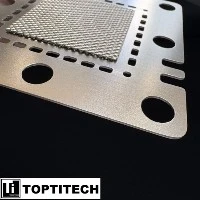
TOPTITECH employs a composite structure of multiple metal-mesh layers with varying mesh counts, achieving a graded pore design through precision sintering technology. This fundamentally changes the filtration mechanism.
Graded Structure Design Principle

Filtration Mechanism Shift:
Traditional Single-Layer Mesh: Surface Sieving → Rapid Clogging
Graded Multi-Layer Mesh: Deep, Staged Particle Capture → High Dirt-Holding Capacity
Performance Improvement Data
Comparative testing in polymer melt filtration applications

Key Advantages Summary
---Significantly Extends Service Life
Filtration cycles extended by 5-8 times
Replacement frequency reduced by over 80%
---Stable Filtration Performance
Gradual pressure drop increase (see comparison below)
Improved flow stability, preventing production fluctuations
---Excellent Cost-Effectiveness
Reduces downtime by over 75%
Lowers overall maintenance costs by 60%
Typical Return on Investment (ROI) period: 6-9 months
Application Case: Paint Production Line Filtration Upgrade
Background: An industrial paint manufacturer required filter bag changes every 8 hours, resulting in 40 hours of monthly downtime losses.
Solution: Implemented a 316L Stainless Steel Graded Mesh Filter.
Results:
Filtration cycle extended to 72 hours.
Monthly downtime reduced to 8 hours.
Annual comprehensive cost savings: approximately ¥280,000.
Significant improvement in product consistency.