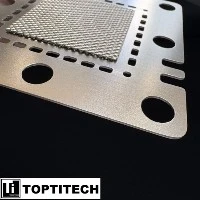

Stainless steel sintered mesh filter elements are extensively utilized in various industries, including environmental protection, within my country. However, many people may still be unfamiliar with this type of filter element and its underlying principles and advantages. In this article, we will provide you with a comprehensive understanding.
A stainless steel sintered filter screen is created by sintering multiple layers of stainless steel mesh at high temperatures under vacuum conditions. This results in a filter element with remarkable strength and a stable structure. Importantly, the three-dimensional mesh porous structure of the filter screen is retained even after the sintering process.


This innovative design overcomes several limitations associated with traditional filter materials. Unlike single-layer metal mesh, which is fragile and prone to breakage, and powder sintering, which offers limited flow capacity, stainless steel sintered mesh filter elements exhibit excellent filtration performance, exceptional load-bearing capacity, and resistance to pressure, corrosion, as well as high precision filtering.
The primary function of stainless steel sintered mesh filters is gas filtration. Industrial gases and environmental gases often contain a multitude of bacteria, dust, and impurities. Directly releasing these contaminants into the air can cause significant harm to human health. Therefore, it becomes imperative to employ stainless steel sintered mesh filters to purify the gases, ensuring compliance with emission standards before discharge.
It's worth noting that sintered filter screens may encounter clogging issues. Due to their construction, consisting of wire mesh with varying aperture sizes, dust particles can adhere to the filter screen, leading to blockages. This occurs when the particle size exceeds the aperture size or when particles stick to the mesh. It's important to recognize that all filter materials are susceptible to clogging unless the pore size significantly surpasses the particle size, and no sticking occurs. In the next article, we will teach you how to clean the filters.