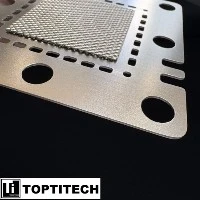

1. The sealing effect holds significant importance when it comes to stainless steel filter elements. A high-quality stainless steel filter element should possess a strong sealing effect, leading to enhanced filtration efficiency. Several factors influence the sealing effect of stainless steel filter elements available in the market.
To comprehend the sealing effect of these filter elements, it is crucial to consider various technical parameters such as the maximum flow rate, filter area, filtration accuracy, and the material utilized in the stainless steel filter element. These parameters directly affect the sealing effect. For instance, a higher maximum flow rate indicates better sealing performance, while larger filtration areas and higher filtration precision also signify improved sealing capabilities of the filter element. Additionally, the choice of material is critical; stainless steel options like 304 stainless steel and 316 stainless steel are commonly used. Opting for high-quality materials greatly contributes to achieving the desired sealing effect.
Our factory supplies stainless steel filter elements that are increasingly recognized and chosen by consumers due to their outstanding sealing effect, high filtration precision, large filtration area, and long lifespan. Please feel free to reach out to us for further inquiries.
 Powder stainless steel filter
 stainless steel filter element
 stainless steel wire mesh
2. With the progress of the industry, stainless steel filter elements have found extensive usage in various filtration and microfiltration sectors. These elements can be categorized into two types based on structure: inner filters and outer filters. Furthermore, they can be classified as fine filtration or coarse filtration. Among them, stainless steel element filters are susceptible to clogging over time, a concern shared by many customers. To address this issue, TOPTITECH advises employing backwashing to restore the filtration area and eliminate blockages when the stainless steel filter element becomes obstructed, thereby affecting filtration efficiency. Advanced stainless steel filter element manufacturers can utilize ultrasonic waves for this purpose.
Ultrasonic cleaning offers the most thorough cleaning, achieving a cleaning rate exceeding 95%.
Generally speaking, the stainless steel filter's sintered filter element should be cleaned once or twice a year.
The cleaning process for the sintered filter element is straightforward, primarily involving backwashing. If residues persist after rinsing, soaking the element in a mildly acidic or basic solution followed by further washing can help enhance cleanliness. If the aforementioned methods fail to achieve satisfactory results, ultrasonic cleaning can be employed.
Given the continuous operation of stainless steel sintered filter elements in harsh working environments, cleaning the filter element every three months or less is advised.