
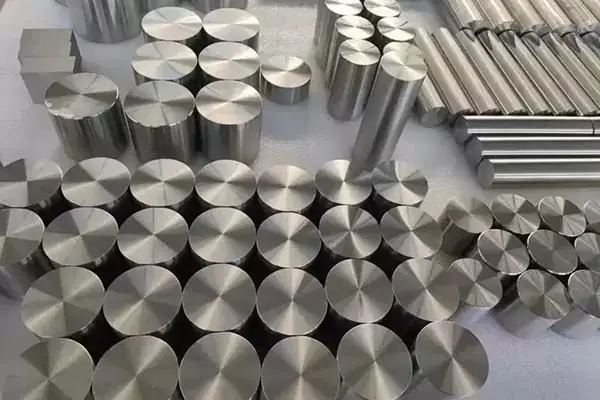
TA18 titanium alloy represents a pinnacle of material science, combining exceptional torsional strength, corrosion resistance, and thermal stability for aerospace, automotive, and precision engineering applications. Its dual-phase α+β microstructure, achievable through controlled thermomechanical processing, delivers an optimal balance between high yield strength and fracture toughness.
Superior Torsional Performance Under Extreme Conditions
The alloy's torsional behavior stems from its refined grain boundaries and homogeneous second-phase dispersion. Electron microscopy reveals how optimized heat treatment cycles enhance dislocation mobility, enabling superior energy absorption during shear deformation. Unlike conventional alloys, TA18 maintains torsional rigidity at elevated temperatures due to dynamic precipitation hardening, where thermally stable intermetallic phases inhibit grain boundary sliding. Vacuum arc remelting further minimizes oxide inclusions that could initiate crack propagation under cyclic loading.
Precision Melting Methodologies for Microstructural Control
Advanced melting protocols are critical to unlocking TA18's full potential. Triple vacuum induction melting ensures chemical homogeneity while suppressing deleterious interstitial elements like oxygen and nitrogen. Recent studies highlight the correlation between rapid solidification rates and suppressed β-phase coalescence, resulting in finer Widmanstätten structures. Post-melting hot isostatic pressing (HIP) eliminates residual porosity, achieving near-theoretical density essential for high-stress applications.
High-Temperature Adaptability and Future Frontiers
TA18's creep resistance outperforms most titanium alloys in sustained thermal exposure, attributed to its Mo-stabilized β-phase network. Ongoing research explores rare earth dopants to further elevate recrystallization thresholds, potentially extending service limits beyond current aerospace standards. The alloy's synergy of manufacturability via superplastic forming and post-weld heat treatability positions it as a cornerstone material for next-generation propulsion systems and cryogenic fuel storage.