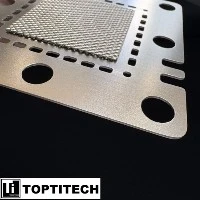

Porous titanium plates offer numerous advantages, including high strength, large flux, continuous and stable operation, low energy consumption, simplicity of operation, high filtration accuracy, excellent separation efficiency, strong resistance to corrosion and pollution, high-quality filtered products, and the potential for reuse after treatment.

The size of the powder particles significantly affects the pore characteristics of porous titanium plates. In general, finer powder particles result in higher porosity and smaller pore sizes in the titanium plate.
Finer powder particles possess increased surface area and enhanced contact between particles, facilitating the formation of interconnected pores during sintering. Additionally, fine powders can more uniformly fill the plate's pores, leading to a well-distributed range of pore sizes, increased porosity, and uniformity in pore size distribution.

Conversely, larger powder particles reduce the contact area between particles, resulting in fewer pores formed during sintering and larger pore sizes. Moreover, larger particles tend to unevenly fill the plate, leading to an uneven pore structure with alternating large and small pore sizes.
To summarize, the particle size of powders plays a crucial role in determining the pore characteristics of porous titanium plates. When manufacturing such plates, it is essential to select an appropriate powder particle size based on specific requirements to achieve the desired porosity and pore size distribution.

TopTiTech porous titanium plates can be customized in terms of powder particle size and thickness according to the customer's specific applications, enabling customers to achieve excellent performance in filtering and PEM electrolyzers.