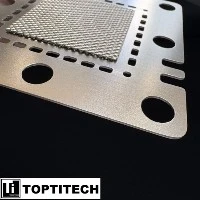


Titanium seamless tube manufacturing is a complex and precise process that requires strict control at every stage to ensure the highest quality of the final product.
The titanium seamless tube manufacturing process is as follows:
1. Material Selection:
Titanium alloy, being the primary material for seamless tubes, requires careful consideration of its mechanical properties, corrosion resistance, and specific application requirements.
2. Raw Material Processing:
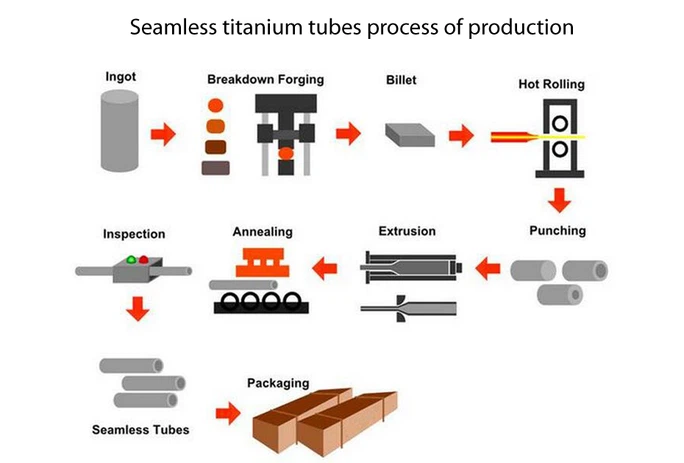
Selecting suitable titanium alloy billets, they undergo preprocessing such as preheating and forging to ensure proper structure and dimensions.
3. Hollow Billet Preparation:
The processed titanium alloy billets are transformed into hollow billets through processes like rolling, drawing, or forging, ensuring the formation of a hollow interior.
4. Heat Treatment:
Hollow billets undergo heat treatment processes such as annealing or solution treatment to eliminate stress, adjust the microstructure, and enhance mechanical and corrosion-resistant properties.
5. Piercing:
Using a piercing machine, the heat-treated hollow billets are pierced to create an interior bore.
6. Hot Rolling or Cold Drawing:
The pierced billets undergo hot rolling or cold drawing processes where multiple passes reduce the wall thickness and increase the length of the billets.
7. Heat Treatment and Annealing:
Post hot rolling or cold drawing, the tubes undergo heat treatment and annealing processes to eliminate residual stress, improve mechanical properties, and refine the grain structure.
8. Straightening and Finishing:
The tubes are straightened and finished to ensure dimensional accuracy and surface smoothness, meeting the required specifications.
9. Tube Inspection:
Manufactured seamless tubes undergo various quality inspections, including dimensional checks, mechanical property testing, chemical composition analysis, and non-destructive testing.
10. Surface Treatment:
Based on specific application requirements, seamless tubes undergo surface treatments such as acid cleaning, polishing, or sandblasting.
11. Final Inspection and Packaging:
Thorough final inspections are conducted to ensure compliance with relevant standards and customer requirements. The tubes are then appropriately packaged and labeled for delivery.