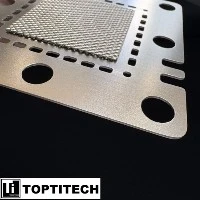

High-purity copper titanium alloy, renowned for its exceptional properties, represents a significant advancement in copper-based alloys. This alloy boasts superior strength, excellent conductivity, high elastic modulus, exceptional bendability, and stress relaxation properties. Achieving these characteristics typically involves high-temperature solution treatment followed by aging processes.

High-purity copper titanium alloy demonstrates outstanding yield strength, ultimate resilience, conductivity, ductility, and fatigue resistance. Notably, it exhibits excellent stress relaxation resistance, and bendability, and surpasses conventional high-performance copper alloys like beryllium copper. With a density of approximately 8.70 g/cm³ and an elastic modulus of around 127 GPa, this alloy combines high strength with good conductivity, with electrical conductivity ranging from 12% IACS to 20% IACS.
Due to its high strength and conductivity, high-purity copper titanium alloy finds utility in electronic connectors, camera modules, and 3C devices such as smartphones and computers for manufacturing structural components like chassis and hinges. In the aerospace sector, titanium alloys are extensively utilized in aircraft structural components and engine parts due to their lightweight nature and high strength. Copper titanium alloy is also employed in manufacturing battery terminals, antenna connectors, and SIM card connectors, with alloys like C1990HP and NKT322 excelling in these applications.
The fabrication of high-purity copper titanium alloy necessitates stringent control over composition uniformity and minimizing metal oxidation during the melting process. Vacuum consumable arc melting is an effective method ensuring low gas content, minimal inclusions, and uniform structure in the alloy. Attention to vacuum levels and protective gas usage during melting is crucial to reduce oxygen content and prevent metal oxidation. For high-performance ultrafine-grained copper titanium alloys, researchers have developed the "Eutectoid Transformation -> Quenching -> Deformation" (EQD) strategy, enabling the large-scale preparation of ultrafine-grained structures through conventional hot working equipment.