
Titanium tubing is indispensable in demanding sectors like aerospace and chemical processing, prized for its exceptional strength-to-weight ratio and superior corrosion resistance. However, damage in service can occur, making proficient repair welding a critical skill for maintenance and longevity. Mastering this process requires a rigorous methodology focused on contamination control and precise thermal management to restore structural integrity and performance.
The foundation of a successful repair lies in immaculate pre-welding preparation. Titanium's acute reactivity at elevated temperatures necessitates an absolutely clean substrate, free of organic residues and oxides. Meticulous degreasing with specialized solvents must be followed by mechanical abrasion to remove all surface scale, revealing the pristine base metal. This entire procedure must be conducted in a controlled environment to prevent airborne contaminants from compromising the weld zone before the arc is even struck.
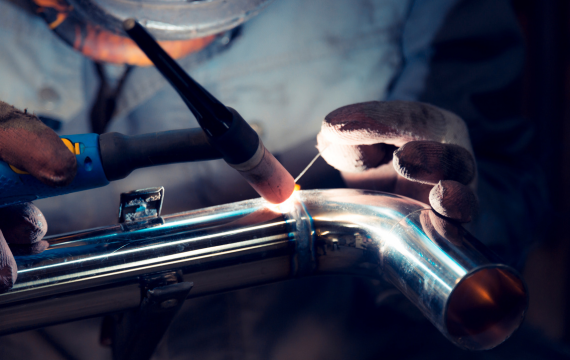
Selecting the appropriate welding technique is paramount. Gas Tungsten Arc Welding remains the prevalent choice for titanium repair due to its excellent control and high-quality deposition. The process relies on a high-purity inert shielding gas to effectively exclude atmospheric gases, preventing embrittlement. Alternatively, laser beam welding offers a high-energy density solution, characterized by rapid welding speeds and a minimized heat-affected zone, which reduces distortion and residual stress, albeit with higher equipment and fixturing demands.
The execution of the weld demands disciplined parameter control. Welding current, travel speed, and gas flow rates must be calibrated to achieve an optimal balance of heat input. Excessive amperage or slow travel speed can lead to grain coarsening and significant distortion, while insufficient heat input risks lack-of-fusion defects and inclusions. The welder must maintain consistent torch angle and arc length, ensuring uniform bead geometry. For multi-pass repairs, thorough interpass cleaning is non-negotiable to remove any nascent oxide film.
Post-weld heat treatment is often employed to address the metallurgical consequences of welding. A carefully controlled stress relief anneal helps to recrystallize the fused microstructure, dissipating residual stresses and enhancing ductility within the weld joint. Subsequent surface finishing, through mechanical or electrochemical polishing, not only improves aesthetics but also re-establishes a continuous passive oxide layer, which is vital for the component's long-term corrosion resistance in aggressive media.
Throughout the entire operation, vigilant attention must be paid to three critical factors: thermal management, atmospheric shielding, and weld progression. The welding thermal cycle must be constrained to prevent excessive grain growth. The integrity of the inert gas shield, from the trailing cup to any required back-purging, must be absolute to avoid oxygen and nitrogen pickup. Finally, a stable and consistent travel speed is essential for producing a sound, defect-free weld profile with complete penetration.
Given the procedural complexity and severe consequences of failure, consulting a certified welding engineer is strongly recommended before undertaking critical titanium repairs. Their expertise in procedure qualification and metallurgical oversight provides the necessary assurance that the repaired component will meet its original design specifications and service requirements, guaranteeing operational safety and reliability.