

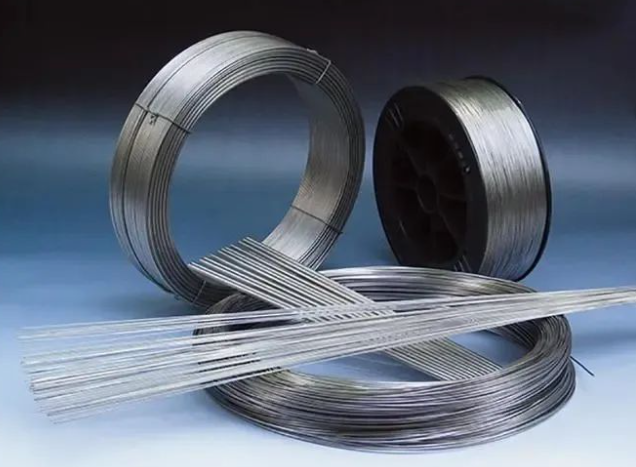
In recent years, titanium wires have emerged as pivotal components within various industries owing to their distinctive properties and versatile applications. Titanium wires, typically supplied in coil or straight form, adhere to varying diameter specifications across different countries. In China, as per the standard GB3623-83, titanium and titanium alloy wires boast diameters not exceeding 6mm. These wires, categorized based on performance and application requirements, encompass a spectrum of types including pure titanium wires, titanium alloy wires, pure titanium eyeglass wires, titanium straight wires, titanium welding wires, titanium hanger wires, titanium coil wires, titanium bright wires, medical titanium wires, and titanium-nickel alloy wires, each tailored for specific purposes.
With respect to specifications, titanium wires offer diverse dimensions to cater to distinct needs. For instance, standard titanium wires range between φ0.8-φ6.0mm, whereas specialized eyeglass titanium wires and hanger titanium wires exhibit specifications of φ1.0-φ6.0mm and φ0.2-φ8.0mm, respectively. Major standards governing titanium wires include GB/T, GJB, AWS, ASTM, AMS, and JIS, while grades span from TA0 to TA10, TC1 to TC11, and GR1 to GR5 among others. Titanium wires are classified into annealed (M), hot-worked (R), and cold-worked (Y) states, each with distinct physical and chemical properties. Widely employed in aerospace, chemical, and medical sectors, titanium wires are favored in aerospace for their corrosion resistance and low weight, in chemical industries for their corrosion resistance ensuring equipment longevity, and in medical applications for their biocompatibility and mechanical strength in dental implants and bone mending procedures. Additionally, titanium wires exhibit exceptional antistatic properties useful in manufacturing antistatic flooring and garments.
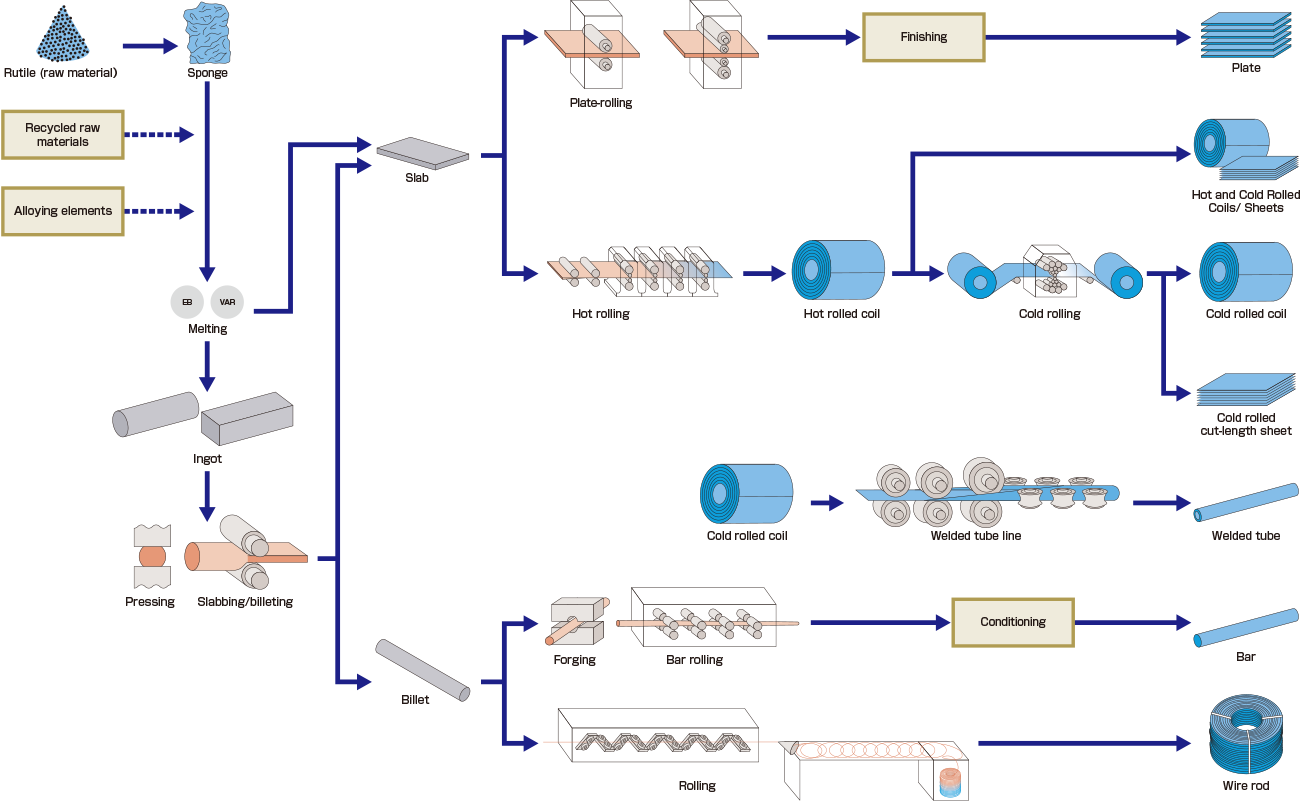
The production process of titanium wires entails multiple stages, including raw material preparation, production line inspection, continuous manufacturing, and packaging. Raw materials primarily sourced as titanium ores, titanium scrap, or titanium sponge undergo stringent testing pre-production to ensure purity and chemical composition align with production standards. Continuous production necessitates adequate raw material reserves for seamless and stable manufacturing processes. Finally, quality-tested titanium wires are meticulously packaged, labeled, and stored in designated dry areas awaiting distribution or further processing.


