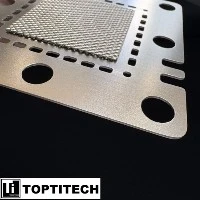


Sintered titanium plates are widely used in various industries, and maintaining their surface smoothness is crucial for ensuring quality and performance. In this article, we will discuss several effective methods to ensure optimal surface smoothness during the manufacturing process of sintered titanium plates.
Material Selection
Choosing high-quality titanium alloy powders as raw materials is essential for achieving superior surface smoothness. These powders should possess uniform particle size and shape to minimize surface defects. By carefully selecting the raw materials, we can ensure better surface quality in the final product.
Cleaning and Treatment
Thorough cleaning and treatment of the raw materials are necessary before manufacturing sintered titanium plates. This involves removing surface impurities, dirt, and oxides. Common methods include acid washing, solvent cleaning, and sandblasting. Employing these treatment steps helps reduce surface defects and establishes a solid foundation for subsequent manufacturing processes.
Sintering Process Control
The sintering process is a critical step in manufacturing sintered titanium plates. Precise control of temperature, atmosphere, and time parameters is essential. This control ensures uniform material shrinkage during sintering, minimizing the occurrence of surface pores and defects. By carefully managing the sintering process, we can achieve a more uniform and smoother surface.
Processing and Polishing
Post-manufacturing, additional processing, and polishing may be required to further enhance surface smoothness. Mechanical machining, grinding, polishing, and electrochemical polishing are commonly employed techniques. These methods help eliminate surface irregularities and minor defects, resulting in a smoother surface finish.
Inspection and Quality Control
Lastly, various testing methods are utilized to evaluate the surface quality of sintered titanium plates. Optical microscopy, scanning electron microscopy (SEM), surface roughness measurement, and non-destructive testing are common inspection techniques. These tests help verify compliance with surface smoothness requirements and enable necessary quality control measures.
By employing meticulous material selection, thorough cleaning and treatment, precise process control, effective processing and polishing, and rigorous inspection and quality control, we can ensure optimal surface smoothness in the manufacturing of sintered titanium plates. Adhering to these steps guarantees the production of high-quality sintered titanium plates that meet the diverse requirements of different industries.