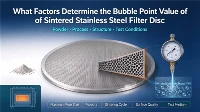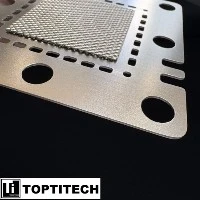

Stainless steel sintered mesh and stainless steel sintered felt are innovative stainless steel filter materials designed specifically for melt filtration. They possess exceptional attributes such as corrosion resistance, high-temperature resistance, and consistent filtration accuracy. These materials find extensive application in diverse industries including nuclear, petrochemical, aerospace, food and medicine, metallurgical machinery, and power electronics.
Given their similar properties, selecting between a sintered mesh filter element and a sintered felt filter element can pose a challenge for customers in practical scenarios. Choosing between stainless steel sintered mesh filter elements and stainless steel sintered felt filter elements can be a crucial decision for customers in various industries. Both materials offer corrosion resistance, high-temperature resistance, and stable filtration accuracy. To make the right choice, it's important to consider the following factors.
Material Composition:
Stainless steel sintered mesh is created by stacking multiple layers of stainless steel woven meshes, which are then pressed, rolled, and vacuum-sintered at 1260 °C. This process results in a filter element with strong mechanical properties and overall rigidity.
Stainless steel sintered felt, on the other hand, is made of fine metal fibers with different wire diameters. These fibers are arranged in a non-woven, overlapping configuration and subjected to high-temperature vacuum sintering.
Sintering Process:
The sintering process for sintered mesh involves layering multiple stainless steel metal woven meshes with different mesh sizes. This creates an orderly cross-sectional structure within the sintered mesh.
Sintered felt, however, is formed by laying the metal fibers randomly and then pressing and sintering them. This results in a disordered cross-sectional structure.
Filtration Range and Dirt-Holding Capacity:
Sintered mesh offers a larger filtration range, while sintered felt provides a relatively high dirt-holding capacity. The choice between the two depends on the specific filtration requirements of the application.


To choose suitable products, consider the filtration needs, flow rate, and desired filtration accuracy for your particular application.
Additionally, it's crucial to address any concerns related to the durability and longevity of stainless steel sintered mesh filters. Factors such as clay accumulation, motor rotation, screen-frame fit, and screen quality can contribute to premature damage. To mitigate these issues, you can increase vibration amplitude, flush the screen with water to reduce viscosity, adjust the screen angle for better cuttings discharge, and replace or adjust the mesh or flow rate.
Before using a sintered mesh filter, ensure that all accessories and sealing rings are complete and undamaged. Clean the new filter with detergent (avoid using acid cleaners) and then subject it to high-temperature cleaning, sterilization, or disinfection if required.
During installation, make sure to connect the inlet and outlet correctly. The liquid inlet is located at the bottom of the pipe filter, while the clean liquid outlet is connected to the filter socket. If the inner plastic bag of the new filter element is intact, avoid tearing it before installation. For filters requiring high-quality standards, sterilize them with high-temperature steam after installation to prevent contamination.
Increasing the effective filtering area can significantly extend the service life of a filter. Dust tends to accumulate on the windward side of the filter material, so a larger effective filtering area allows for greater dust retention. Consider the specific structure and site conditions of the sintered mesh filter to determine if increasing the filtration area is feasible.
The advantages of stainless steel sintered filter elements include corrosion resistance, wear resistance, and stability in high-temperature environments. The multi-fiber multi-layer structure provides high porosity and excellent dirt-holding capacity. These filter elements also offer increased hardness, making them less prone to detachment during use and easier to clean. Stainless steel sintered filter elements are cost-effective and offer uniform surface filtration for various particles. Their uniform pores ensure strong filtration accuracy, making them suitable for high or low-temperature environments. Their reusability lowers the cost of manufacture.
Oil pollutants in melt-blown sintered mesh can pose various hazards. Mechanical impurities can lead to increased wear, oil leakage, and blockages. Water and chemicals can cause corrosion, deterioration of oil, and reduced lubricating film thickness. Dissolved air and gases can cause foaming, system irregularities, temperature increase, and cavitation damage to pumps.