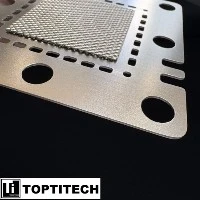

Metal filter elements are critical components in industries ranging from pharmaceuticals to chemical processing. Two primary manufacturing methods-compression molding and isostatic pressing-are widely used to shape these filters. While both processes involve compacting metal powders, their principles, outcomes, and applications differ significantly. The main differences between the porous metal filter element compression molding process and the isostatic pressing process are reflected in the following aspects:

Compression Molding
How it works: Metal powder is pressed into a rigid mold using unidirectional mechanical force (top-down or bidirectional).
Pressure distribution:
Pressure concentrates along the pressing axis (vertical direction).
- Mold pressing is a method of manufacturing parts by compacting metal powder. In the production of stainless steel filter cores, mold pressing typically involves filling stainless steel powder into a mold and then applying high pressure to bind the powder into the desired shape of the component.
- Mold pressing can be used for producing large quantities of parts, offering advantages of high production efficiency and lower costs.
- In mold pressing, a subsequent sintering process is usually required to enhance the density and strength of the parts.
Isostatic Pressing
How it works: Powder is sealed in a flexible mold (e.g., rubber or polymer) and subjected to uniform hydraulic pressure from all directions (oil/water medium).
Pressure distribution:
Because pressure is isotropic, or equal in all directions, friction effects are avoided.
- Isostatic pressing is a process of molding metal powder into a shape using high temperatures and pressure. In this process, the metal powder is typically placed in a mold and subjected to both high pressure and high temperature.
- Isostatic pressing can produce parts with higher density and more uniform structure as the high temperature and pressure help the metal powder to bind together more effectively.
- Isostatic pressing is commonly used for manufacturing parts that require high precision and complex structures, such as stainless steel filter cores.

In summary, mold pressing is more suitable for producing large quantities of relatively simple-shaped parts, while isostatic pressing is more suitable for producing high-density, high-precision, and complex-structured parts. When manufacturing products like stainless steel filter cores, TOPTITECH may consider choosing the appropriate pressing process based on the product requirements and budget constraints.