

Titanium alloy, an exceptional and advanced metal, has gained widespread applications due to its lightweight nature, corrosion resistance, and remarkable mechanical properties. However, the original appearance of titanium alloy may not always meet demanding aesthetic standards. This is where the art of polishing emerges as a crucial step in the stunning transformation of titanium alloy products.
Polishing, despite its seemingly simplistic nature, encompasses a wealth of technical expertise and artistry. Utilizing mechanical or chemical methods, involves the removal of surface flaws and irregularities, resulting in a smooth and radiant finish. This process not only enhances the visual quality of titanium alloy products but also increases their corrosion resistance and biocompatibility.

Key Steps in Titanium Alloy Polishing
1. Surface Pre-treatment
Surface pre-treatment is an indispensable initial step in the journey of titanium alloy polishing. Techniques like acid washing and electrolytic polishing are employed to eliminate detrimental substances such as corrosion and oxide layers, laying a strong foundation for subsequent polishing processes.
2. Grinding Process
The grinding process assumes a pivotal role in achieving a polished surface for titanium alloy. Whether through mechanical or manual grinding, it effectively eliminates imperfections, such as burrs and uneven surfaces, ensuring a smoother appearance. Titanium-specific polishing materials such as diamond and cubic boron nitride are indispensable tools, thanks to their excellent thermal conductivity and hardness.
3. Polishing Climax
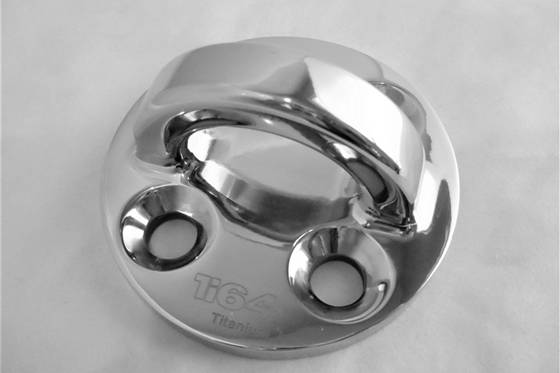
As grinding concludes, the polishing process reaches its climax. Through mechanical or chemical means, the surface of titanium alloy products undergoes continuous refinement, ultimately attaining a mirror-like effect. Mechanical polishing involves stages such as rough polishing, intermediate polishing, precision polishing, and mirror polishing, each requiring meticulous control of polishing force and direction to ensure a flawless presentation of the product.
4. Chemical Polishing
Chemical polishing is an alternative method that achieves the desired polished effect through chemical reactions. It is particularly suitable for complex titanium alloy structures, such as dental prostheses. Chemical polishing offers the advantage of simplicity and minimal equipment requirements. However, precise control of process parameters is challenging, as it must ensure the desired polishing effect without compromising product precision.
In conclusion, titanium alloy polishing is a complex and intricate art form. It demands specialized skills and meticulous execution to ensure titanium alloy products achieve the highest standards of visual quality and performance. Through the art of polishing, titanium alloy products not only radiate captivating brilliance but also unleash their unique advantages across various industries.


